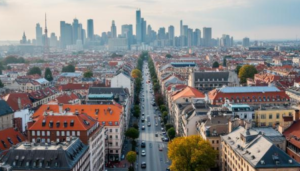

Portugal’s real estate market faces a critical housing shortage, as APPII warns the country must boost annual home construction from 20,000 to 70,000 units by 2029. Discover what this means for buyers, investors, and Portugal’s property future.
Portugal’s Real Estate at a Crossroads: APPII Calls for Tripling New Housing Construction by 2029
Portugal’s real estate market, renowned for its vibrant cities and sun-drenched coasts, is currently at a critical juncture. Despite a global reputation as a top destination for expatriates, retirees, and investors alike, Portugal is facing a severe and persistent housing shortage. At the center of the debate is a stark warning from the Portuguese Association of Real Estate Developers and Investors (APPII): the nation must increase annual new housing construction from 20,000 to at least 70,000 homes by 2029 to avoid deepening its housing crisis.
Exploring details of Portugal’s real estate market, the roots and consequences of the housing deficit, and the necessary measures—highlighted by APPII—to secure a sustainable and equitable housing landscape for future generations.
The Structural Crisis in Portugal’s Real Estate Market
A Historic Deficit
For many years, Portugal’s real estate market has been grappling with a structural housing crisis. Steady demand—driven by rising populations in urban centers, increased international interest, and thriving tourism—has far outpaced the available supply of new homes. According to APPII, the accumulated deficit now hovers at around 300,000 dwelling units.
Current realities:
- Annual new construction stands at approximately 20,000 dwellings.
- The accumulated deficit is fuelled by years of underproduction, even as population and investment interest grow.
- Urban areas, particularly Lisbon and Porto, experience acute shortages, pricing locals and young families out of the market.
The Numbers Underlining the Crisis
Recent statistics reinforce the urgency:
- In 2024, almost 155,000 housing transactions were recorded, but the supply of newly licensed dwellings fell to just 35,000.
- This figure is lower than construction rates two decades ago.
Further deepening the crisis:
- In the first quarter of 2024, new construction licensing plunged by 23.1% compared to the previous year.
- The supply pipeline is dwindling, putting upward pressure on prices in the face of consistent demand.
Surging Prices: The Cost of Imbalance
How Supply and Demand Skew Housing Costs
Portugal’s real estate has always been an attractive investment, but price escalations have reached unsustainable levels. Between 2012 and 2021, housing prices leapt by an eye-watering 78%.
The price surge continues:
- In 2024, an additional 9% increase was recorded.
- Projections indicate a further 16.3% rise in 2025.
In Lisbon, perhaps the market’s bellwether:
- Over half of available homes today cost more than half a million euros.
- This excludes a growing segment of the Portuguese populace, including first-time buyers, service workers, and young professionals.
Socio-Economic Impacts
As prices escalate:
- Local families are priced out of the markets in their own cities.
- Young professionals and middle-income earners struggle to find affordable options.
- The rental market tightens, with rents shooting up in tandem with sale prices.
- Social cohesion is threatened, and the gulf between property owners and would-be buyers widens.
The Economic Bottleneck: Unviable Projects and Bureaucratic Delays
50,000 Homes on Hold
Compounding the housing supply crisis is a dire economic challenge:
- In the last three years, more than 50,000 licensed homes haven’t moved forward to construction due to poor economic viability.
- Projects with all necessary authorizations are rendered unfeasible owing to delays and ballooning costs.
Costs of Delay
Licensing and bureaucratic inertia sharply increase development costs. For each year of delay:
- The cost per square meter rises by up to €500.
- For an average 75 m² home, this means an extra €40,000 per year in additional costs.
- Many developers, facing mounting uncertainties, shelve projects entirely.
A Barrier to Investment
Persistent regulatory delays and uncertainty:
- Discourage both local and foreign investors.
- Stall innovations such as build-to-rent, which could help alleviate pressures in the rental market.
- Propel a cycle where fewer homes are built, keeping supply far behind demand.
APPII’s Blueprint: Pillars for Transformation
The Call to Triple Construction
APPII’s analysis is clear: to normalize the housing supply by 2029 and reduce speculative price inflation, Portugal must build at least 70,000 new homes per year for the next five years.
The Association’s Recommendations:
- Legislative Stability:
- Ensuring that property, zoning, and development laws remain consistent is critical for long-term investment confidence.
- Frequent changes to tax regimes and planning rules have historically spooked investors and slowed development.
- Industrialization and Modernization of Construction:
- Embracing new building technologies can lower costs and speed up delivery.
- Modular construction, sustainable materials, and streamlined project management could transform production scales.
- Administrative Simplification:
- Accelerating and unbureaucratizing licensing processes is crucial.
- APPII warns against introducing new administrative obstacles or weakening mechanisms like tacit approval.
- Objective criteria and contractual clarity in new developments—including the build-to-rent sector—are vital to convincing institutional investors.
Opportunities and Promise: The Build-to-Rent Segment
Institutional Capital as a Solution
One solution suggested by APPII lies in the build-to-rent (BTR) model, which brings together large-scale, professionally managed properties designed for long-term renting.
To maximize BTR’s potential:
- The government must ensure contractual stability.
- Assets must be freely transferable, creating an attractive climate for pension and sovereign wealth funds.
- Examples from markets such as the Netherlands and Germany suggest that BTR can expand the rental stock and moderate price increases.
The Political Dimension: Calls for National Mobilization
APPII urges a whole-of-government approach:
- Collaborate closely with Parliament to define and implement structural solutions.
- Develop policies that not only incentivize new construction, but also safeguard affordability and social cohesion.
- Address short-term barriers while drafting long-term strategies for sustainable growth.
The Cost of Inaction
Without decisive measures:
- Portugal risks deepening its housing deficit, with broad economic fallout.
- Social stability is threatened as home ownership becomes a distant dream for younger generations.
- The quality of life for many Portuguese will be adversely affected as housing precarity becomes the norm.
Comparing Europe: Portugal’s Real Estate in Context
How Portugal’s Housing Crisis Compares
Portugal’s real estate crisis is not unique, but is particularly acute compared to some European peers:
- In Spain, CaixaBank recently highlighted a deficit of 730,000 homes.
- Yet, Portugal’s construction rate per capita lags behind Scandinavian and Central European nations.
- Other countries have responded with aggressive state-backed housing initiatives, fast-tracked permitting, and investment-incentivizing regulations.
Lessons from Abroad
Policymakers can draw inspiration from:
- Vienna’s social housing model, blending private and public initiatives.
- Germany’s fast-tracked licensing programs for urban development.
- Finland’s housing-first approach to social issues.
If Portugal embraces similar strategies while adapting to its unique landscape, it can restore hope to its embattled homeowners and renters.
Real Voices: Homes, Hope, and the Future
Impact on Everyday Portuguese
Interviews and case studies reveal the crisis’s very human toll:
- In Lisbon, Ana, a 32-year-old teacher, shares: “Even flats of 40 square meters are now beyond my reach. I have a good job, but the dream of homeownership is slipping away.”
- In Porto, Rui, a construction manager, adds: “We’re ready to build, but delays and cost overruns make many projects impossible to carry out. We need stability and clear rules.”
Investors’ Perspective
- International property investors, once lured by Portugal’s Golden Visa program, are increasingly wary due to uncertain returns and regulatory unpredictability.
- APPII’s members stress: “We want to invest in Portugal’s future, but need partners in government willing to clear a path.”
Next Steps: A Roadmap for Portugal’s Real Estate Revival
Policy Priorities
- Immediate reduction of bureaucratic hurdles:
- Digitalize permitting and licensing processes.
- Set time limits for approvals, introducing tacit approval if deadlines aren’t met.
- Tax incentives for new builds:
- Offer rebates and credits for large-scale or sustainable housing projects.
- Targeted subsidies for affordable housing:
- Increase public funding for mixed-income developments.
- Incentivize conversion of vacant or underused buildings.
- Modernize workforce skills:
- Invest in training for modern construction technologies and project management.
- Encourage foreign and domestic institutional investment:
- Ensure transparency, stability, and enforceable contracts.
Tracking Progress
- APPII proposes the establishment of an independent monitoring body, reporting annually on construction targets, policy efficacy, and housing market health.
- Public access to data and results would keep the government and industry accountable.
Portugal’s real estate sector stands at a crucial crossroads. The warning from APPII is clear: to address a housing deficit nearing 300,000 dwellings and curb runaway prices, Portugal must act boldly and decisively by tripling annual housing construction to at least 70,000 new homes by 2029. This will require legislative courage, modernization, investor confidence, and—most importantly—a shared commitment from policymakers, developers, and citizens alike.
Without urgent action, not only will the crisis persist, but Portugal’s economic and social harmony may be at risk. But with innovation, cooperation, and clear political will, the nation can once again be a model for inclusive, sustainable, and vibrant urban growth.
Tags:
Portugal real estate, housing crisis, APPII, property market, construction deficit, new dwellings, supply and demand, Lisbon housing, real estate investment, property prices