Despite economic challenges and high interest rates, France luxury real estate market is booming. Discover why demand for prestigious second homes is rising, the unique appeal of French lifestyle, and what makes these premium properties a standout investment in 2025.
Explore the thriving France luxury real estate market in 2025—discover demand trends, where to buy, entry thresholds for top properties, tax realities, and how to access French luxury living without being a billionaire. Insights, tips, and in-depth analysis.
France Luxury Real Estate 2025: Where Demand is Booming, Top Locations, Entry Prices, and What It Really Costs to Own a Prestigious Second Home
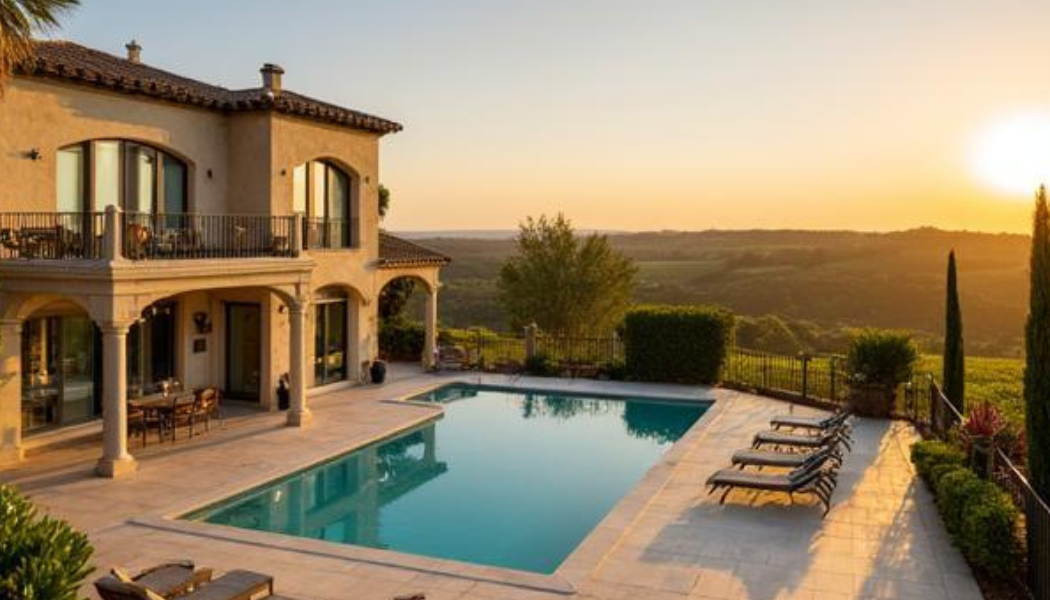
France luxury real estate market is defying global uncertainty and local slowdowns, proving once more that its allure is as irresistible as ever. If you’re dreaming of a historic château in Dordogne, a sprawling Provençal farmhouse, or a dazzling modern villa with Mediterranean sea views, you’re among legions of would-be buyers enchanted by the French premium property dream.
But how do you actually access this market? Where should you look, what does it really cost, and who is buying these extraordinary homes in 2025? This comprehensive guide, fueled by new data from the “Good Fortune” Observatory by Green-acres, provides a complete roadmap for anyone interested in France luxury real estate—whether you’re a seasoned investor, foreign buyer, or simply dreaming of a touch of French prestige.
Table of Contents
- How is France’s Luxury Real Estate Market Performing in 2025?
- What Defines “Luxury” in the French Real Estate Market?
- Where To Buy Luxury Property in France: Top Locations
- The Côte d’Azur & Provence: The Beating Heart of Luxury
- Paris: The Pinnacle of Price and Prestige
- The Alps: Haute-Savoie and the Call of the Mountains
- Other High-Profile Destinations: Bouches-du-Rhône, Dordogne, and More
- Thresholds and Entry Prices: How Much Does Luxury Cost?
- The Most Sought-After Houses in France in 2025: Dream Homes Revealed
- Regional Disparities: Where Luxury Is Cheaper Than You Think
- Taxation on Second Homes: What You Really Pay
- Paris and Major Cities: Top Housing Tax Rates
- Tourist Towns: Surprising Tax Advantages
- Comparing Costs Across Municipalities
- Accessible Luxury: Where Your Money Goes Further
- The New Face of French Luxury Property: Space, Nature, and Tranquility
- Who Buys Luxury Second Homes? French and International Clientele
- Tips For Prospective Buyers: Navigating the Market
- France Luxury Real Estate 2025: Outlook & Final Thoughts
1. How is France’s Luxury Real Estate Market Performing in 2025?
As much of the French housing market cools amid economic headwinds and higher interest rates, one exceptional segment is breaking away: luxury second homes.
Key market stats:
- Luxury property demand rises +9.7% in 2025 (Green-acres “Good Fortune” Observatory)
- General property market stable or consolidating, with transaction volumes slowed by higher rates and caution
- In luxury, the motivation is less about necessity and more about lifestyle, pleasure, and investment diversification
Why is luxury so resilient?
Luxury buyers are less sensitive to rate hikes—they increasingly pay down investments for “affect” rather than financial leverage. For many, French premium property is as much about status, enjoyment, and legacy as yield or capital preservation.
2. What Defines “Luxury” in the French Real Estate Market?
Green-acres’ meticulous study splits the market into percentile bands:
- Top 10% of buyers: Enter from €862,000 nationally
- Top 1% of buyers: Enter from a stunning €3.29 million nationwide
But “luxury” is highly local:
- In Paris, the top 1% threshold is a breathtaking €11.7 million
- In the Dordogne, you can access the same percentile at €1.33 million
Luxury, then, is a sliding scale depending on where you shop.
3. Where To Buy Luxury Property in France: Top Locations
The Côte d’Azur & Provence: The Beating Heart of Luxury
The radiant stretch of southern France takes the crown for density, prestige, and global allure.
- Alpes-Maritimes (Nice, Cannes, Antibes):
- Represents 30.5% of all French prestige market activity
- Entry for top 10%: €1,695,000
- Entry for top 1%: €7,450,000
- Var (Saint-Tropez, Grimaud, Toulon):
- Accounts for 22.4% of luxury market
- Similar thresholds: €1,695,000 (top 10%) / €6,900,000 (top 1%)
Why here?
World-class weather, dazzling coastlines, unrivaled lifestyle, and the glamour associated with Riviera icons. International demand keeps prices stratospheric. Buyers are vying for waterfront mansions, historic bastides, and hilltop villas with infinity pools.
Trends:
Properties here frequently spark bidding wars and often don’t even make it to public market listings.
Paris: The Pinnacle of Price and Prestige
- Share of prestige market: 5.6% (third in France)
- Top 1% tier: €11.7 million — the most expensive in the country
- Iconic neighborhoods (6th, 7th, 8th arrondissements) attract ultra-high-net-worth individuals (UHNWI) from around the world
Parisian luxury is rare, highly sought-after, and deeply discrete. Opulent apartments overlooking the Seine, Haussmann-era mansions, and penthouses with Eiffel Tower views are standards of the highest echelon, often passed down within families.
The Alps: Haute-Savoie and the Call of the Mountains
- Haute-Savoie: 5% of prestigious demand
- Top 10% entrance: €1,390,000
- Top 1%: €4,600,000
France’s luxury mountain market is internationally renowned. Buyers come from across Europe and the Middle East for chalets in Chamonix, Megève, and around Lake Annecy—coveted for exclusive skiing, summer hiking, and jaw-dropping landscapes.
Other High-Profile Destinations: Bouches-du-Rhône, Dordogne, and More
- Bouches-du-Rhône (Aix-en-Provence, Marseille): 4.8% of market
- Dordogne: Enchanting for its châteaux and countryside manors (luxury from €599,000)
Properties outside the top five locations can offer significant value, unique character, and privacy away from the crowds.
4. Thresholds and Entry Prices: How Much Does Luxury Cost?
Departmental breakdown:
| Area | Top 10% Entry | Top 1% Entry |
|---|---|---|
| Alpes-Maritimes | €1,695,000 | €7,450,000 |
| Var | €1,695,000 | €6,900,000 |
| Paris | €1,799,000 | €11,700,000 |
| Haute-Savoie | €1,390,000 | €4,600,000 |
| Dordogne | €599,000 | €1,328,000 |
| Aude | €535,000 | N/A |
And yet, in Meuse, Creuse, or Mayenne, €290,000 to €300,000 is enough to enter the top 10%—less than the price of a modest apartment in central Paris!
5. The Most Sought-After Houses in France in 2025: Dream Homes Revealed
According to Green-acres’ tracking of user interest, the top 10 most-viewed luxury listings in 2025 are a window into French property fantasies:
- Castle in Fleurac (Dordogne): €12M, 2,700 m², 60 hectares of parkland
- Historic Seine-side estate: €2.59M, 390 m², classic French elegance
- Contemporary Nogent-l’Artaud property: €3.45M, 630 m², modern finishes and vast grounds
- Renovated 19th-century castle in Sologne: €4.3M, 800 m², historic charm
Other highlights include sea-view villas in La Croix-Valmer (€2.1M), an estate in Saint-Tropez (€5.8M), and a refined Grimaud property (€2.25M).
These listings are ogled by thousands, suggesting that even window shopping for French luxury is a national pastime.
6. Regional Disparities: Where Luxury Is Cheaper Than You Think
Contrast is key: It’s not just Paris and the Côte d’Azur where dreams are made.
- Aude’s top 10% entry: Only €535,000
- Dordogne: Top 10% at €599,000
- Vaucluse (Provence): A strong compromise at €1,150,000—iconic lavender fields, medieval towns, at less than half Paris’s threshold
This means those with flexibility on location can enjoy luxury at a fraction of the price tag attached to France’s world-famous hotspots.
7. Taxation on Second Homes: What You Really Pay
When dreaming of that grand château or sea-view villa, many forget a crucial cost: the taxe d’habitation (housing tax). While this tax has been abolished for primary homes, it still applies to second homes, and is especially steep in markets under pressure.
Paris and Major Cities: Top Housing Tax Rates
- Paris: Collects €334.2M in second-home tax in 2025, at an average of €2,783 per property (60% increase on base rate)
- Nice: €63.8M collected, avg. €2,360, also with 60% hike
- Other tax-heavy cities: Lyon, Bordeaux, Marseille, Nantes, Montpellier—all use the maximum 60% increase
Tourist Towns: Surprising Tax Advantages
Luxury hotspots such as:
- Cannes
- La Baule-Escoublac
- Le Touquet-Paris-Plage
- Megève
…all apply a 0% hike on the housing tax, making these rich resort towns surprisingly friendly to luxury second-home buyers, even as property prices remain sky-high.
Comparing Costs Across Municipalities
- Lowest average tax: €824 in Agde
- Highest average tax: €2,783 in Paris
Some locations combine high property values with surprisingly moderate recurring taxes—a nuance many overseas and domestic investors often overlook.
8. Accessible Luxury: Where Your Money Goes Further
Look where others aren’t.
In departments like Meuse (€289,000), Creuse (€299,000), and Mayenne (€299,650), you reach the top 10% of buyers for less than a Paris studio.
What do you get?
- Expansive countryside manors
- Historic farmhouses with land
- Tranquility, authenticity, and a slice of the good life without billionaire wealth
Advice:
If you crave prestige but lack a celebrity’s budget, avoid the “golden triangle” of Paris and the Riviera. Instead, target these lesser-known but exceptional regions.
9. The New Face of French Luxury Property: Space, Nature, and Tranquility
COVID-19 and new work/life aspirations have shifted definitions of luxury:
- More buyers want space, privacy, and connection to nature
- Estate living, even away from classic hotspots, is in vogue
- The “discrete luxury” of a large house in a rural setting is as coveted as a bijoux Parisian penthouse
Case in point:
A renovated stone farmhouse in Creuse or a mansion surrounded by Mayenne forests offers exclusivity and space for a fraction of the cost (and none of the crowds) of Côte d’Azur or Saint-Germain-des-Prés.
10. Who Buys Luxury Second Homes? French and International Clientele
- French nationals with established wealth, family inheritance, or entrepreneurial success lead the luxury segment
- Foreign buyers (Brits, Swiss, Belgians, Americans, Middle Eastern, and Chinese investors) flock to Paris, the Alps, and the Cote d’Azur
- Increasing numbers of tech millionaires and remote workers seek countryside prestige
- Many buyers see these homes as both a legacy for family and a tangible asset with rental potential
Note: The French luxury market has historically fared well during global crisis periods, as the country’s “bricks and mortar” appeal, quality of life, and cultural prestige remain unrivaled.
11. Tips For Prospective Buyers: Navigating the Market
- Set your priorities: Coast, city, or country? Heritage, sea view, or mountain air?
- Know the thresholds: Local thresholds for “luxury” may surprise you—do your homework to get the best for your budget.
- Mind the taxes: Factor in not just purchase price, but annual housing tax and potential capital gains taxes.
- Work with local experts: Many of France’s most spectacular properties are never publicly listed. Specialist agencies and “property finders” can grant access to “off-market” mansions and estates.
- Check ownership structures: French property law can be complex (usufruct, SCI company structures, inheritance law). Get legal advice.
- Consider rental options: Many luxury estates can be partly funded through seasonal rentals—especially in the Riviera, Alps, and Provence.
- Remember running costs: Older homes, especially châteaux, demand major maintenance and staff; factor this into your annual calculations.
- Beware exchange rates if you’re buying from abroad.
12. France Luxury Real Estate: Outlook & Final Thoughts
Despite macroeconomic turbulence and high interest rates elsewhere in the market, French luxury real estate stands apart. Demand is surging nearly 10% in one year for second homes, driven by France’s “art de vivre,” strong global currency, and unique lifestyle offering.
Major takeaways:
- Location is everything: Prestige comes at a price, but savvy buyers can find “hidden gems” in less-hyped regions.
- “Luxury” is local: Entry thresholds in Meuse or Creuse are accessible compared to Paris or Cannes.
- Tax considerations are essential: Some luxury hot spots are more tax-friendly than city centers.
- The market is evolving: Discreet rural luxury, health, nature, and heritage are as trendy as traditional coastal mansions.
- International appeal is undiminished: As global uncertainty persists, France’s premium homes hold strong appeal for sophisticated buyers the world over.
Whether your dream is a turreted castle, a Provençal villa lost among lavender fields, or a chic Parisian pied-à-terre, the French luxury market in 2025 offers a world of opportunities—for those who know where, and how, to look.
Frequently Asked Questions: France Luxury Real Estate
Q: What is considered “luxury real estate” in France?
A: It generally refers to properties in the top 10% (€862,000+) or 1% (€3.29 million+) of sale prices within a given region, but the threshold varies hugely by area.
Q: Which are the most popular areas for luxury homes in France?
A: The Côte d’Azur (Alpes-Maritimes, Var), Paris, the Alps (Haute-Savoie), Bouches-du-Rhône, and Dordogne dominate demand.
Q: How much is the housing tax on a French second home?
A: It varies by municipality—€2,783 on average in Paris (with a 60% surcharge), but as little as €800–€1,000 in some tourist towns with no surcharge.
Q: Can foreigners buy luxury property in France?
A: Yes—France is open to foreign buyers, with no restrictions. Professional advice is crucial for navigating taxes, inheritance, and legalities.
Q: Is rural France a good option for affordable luxury?
A: Absolutely. For under €300,000, you may access prestige homes in areas like Meuse, Creuse, and Mayenne.
Q: Are French luxury homes a good investment?
A: Historically, French prestige property is seen as a safe, desirable asset, with strong rental and capital appreciation potential in top areas.
Want to Learn More or Get Started?
- See exceptional properties: Explore listings on platforms like Green-acres, Belles Demeures, and Sotheby’s International Realty.
- Consult a French property expert for tailored market advice, legal help, and access to off-market gems.
- Plan a scouting visit: The best way to select your dream home is to experience regions firsthand.
References:
- Green-acres “Good Fortune” Observatory 2025
- French National Real Estate Federation (FNAIM)
- INSEE French Statistics
- French Notaries’ Reports
- Major property agency reports (Sotheby’s, Knight Frank)
- French government tax data
For further insights on France luxury real estate, custom property searches, or the latest market updates, subscribe to our newsletter or get in touch with our French property specialists.