

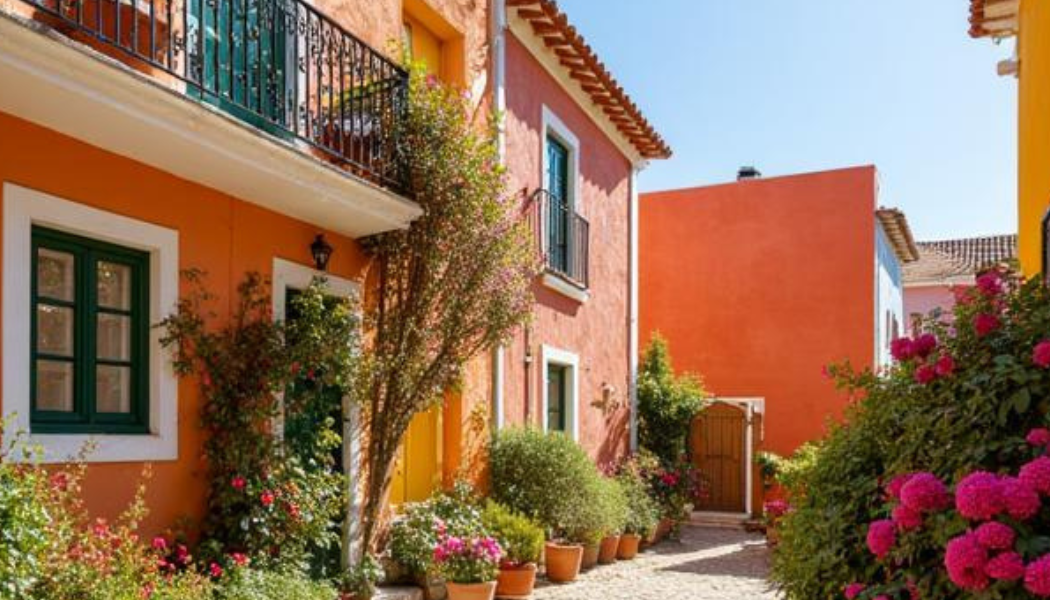
Portugal house price averagely surged to €443,200 in February 2026, up 12% year-on-year. Explore regional trends, rent dynamics, market forces, and the outlook for buyers and renters in the Portuguese real estate landscape.
Portugal House Prices Hit Record Highs in February 2026: An In-Depth Market Analysis
Portugal’s real estate market continued on its upward trajectory in February 2026, with average house prices soaring to an all-time high amid resilient demand and limited supply. According to the latest Imovirtual Barometer – a leading real estate market report – the national average cost of a home reached €443,200, marking a 1.9% increase compared to January and a remarkable 12% growth year-on-year from February 2025, where the average hovered around €395,900.
As the country continues to attract international buyers and record-setting demand from locals, market dynamics in Portugal show clear signs of bifurcation: the sales market persistently appreciates while rental prices plateau at historic highs, keeping pressure firmly on both current and prospective residents.
In this comprehensive 5,000-word analysis, we’ll dissect Portugal’s regional house price and rent trends, uncover the driving forces behind current market conditions, and explore implications for buyers, renters, and investors moving forward.
Table of Contents
- Sales Volume and Demand in 2026
- Key Factors Influencing House Price Growth
- Comparison to European Housing Markets
- Implications for Buyers and Investors
- Future Outlook and Projections for 2026 and Beyond
- Conclusion: Navigating an Evolving Portuguese Real Estate Landscape
1. National Overview: Portugal House Prices and Sales in February 2026
The Imovirtual Barometer for February 2026 underscores a robust and resilient Portuguese housing market. The average national sale price now stands at €443,200, with a steady monthly rise (January: €435,000) and a substantial annual escalation (+12%).
This trend is consistent with several years of market growth, propelled by Portugal’s economic stability, increasing international appeal, and pronounced supply limitations, especially in high-demand urban and coastal regions.
Meanwhile, average asking rents nationwide have stabilized at €1,500, a figure that, while unchanged from January, represents a significant 20% increase from a year prior (February 2025: €1,250).
Notably, while volatility can be observed at the district level, particularly in less urbanized areas, national trends firmly point to escalating property values and sustained rental tensions.
2. Regional Price Trends: North, Centre, and South
The North: Strong Performers and Emerging Resilience
The North remains a diversified real estate landscape, with both cosmopolitan hubs and smaller cities experiencing different price dynamics:
- Regional average: €300,000 (+9.1% year-on-year)
- Porto: €409,900 (-2.4% monthly), but +5.9% from last year
- Braga: €369,900 (-1.4% monthly), +12.1% year-on-year
- Aveiro: Stable at €375,000 (+9.5% year-on-year)
- Viseu: €232,800 (+0.2% monthly), an impressive +19.4% year-on-year
- Vila Real: €185,000 (-2.1% monthly), but up +8.2% over 12 months
- Viana do Castelo: Stable at €300,000 (+9.1% year-on-year)
- Bragança: €120,000 (+4.3% year-on-year)
Key Takeaway: While Porto and Braga have seen monthly declines, their annual performance remains solid. Secondary cities like Viseu stand out with nearly 20% annual appreciation, suggesting increasing interest in more affordable markets.
The Centre: Record Annual Growth in Multiple Districts
The Centre of Portugal has seized the spotlight for year-on-year growth:
- Regional average: €279,500 (-1.4% monthly), but +22.9% year-on-year
- Castelo Branco: €109,000 (+11.2% monthly), +25.3% year-on-year
- Coimbra: €289,000 (-0.3% monthly), +23% year-on-year
- Leiria: €338,000 (-3.4% monthly), but +20.7% over 12 months
- Santarém: €270,000 (-2.5% monthly), +22.7% year-on-year
- Lisbon: €641,000 (-1.4% monthly), but +6.8% over 12 months
- Guarda: €100,000 (-6.1% monthly), remains +2.6% above last year
Key Takeaway: Major cities like Lisbon, despite slight monthly corrections, demonstrate ongoing resilience. Secondary cities (Coimbra, Leiria, Castelo Branco) post exceptional annual growth, reflecting urban spillover and renewed interest in more affordable locations.
The South: Kicking Up Growth Despite Corrections
The South combines luxury and accessibility, offering diverse investment opportunities:
- Regional average: €275,000 (+1.9% monthly), +10% year-on-year
- Faro (Algarve): €585,500 (-0.8% monthly), but up +18.3% year-on-year
- Setúbal: €470,000 (-4.1% monthly), +5.6% year-on-year
- Évora: €275,000 (+1.9% monthly), +10% year-on-year
- Beja: €195,000 (-2.4% monthly), but +14.7% over 12 months
- Portalegre: €132,900 (-4.0% monthly), still +10.8% annually
Key Takeaway: Despite month-to-month fluctuations, Faro and Beja emerge as regional stars with their double-digit annual appreciation. Setúbal’s slight dip conceals a robust annual gain.
3. Rental Market: Prices Remain at Historic Highs
While the national average rent stayed at €1,500 in February, up 20% from the previous year, there is clear evidence of monthly stabilization across most regions. Yet, this apparent stabilization masks the sustained pressure on household budgets:
Northern Districts
- Average regional rent: €800 (-5.9% monthly), but +6.7% year-on-year
- Porto: €1,200 (stable), +4.3% year-on-year
- Braga: €945 (-0.5% monthly), +5% year-on-year
- Viana do Castelo: €800 (-5.9% monthly), but 6.7% above last year
- Aveiro: €900 (-2.4% monthly), stable annually
- Vila Real: €600 (stable), up 20% over 12 months
- Bragança: €550 (unchanged), flat year-on-year
- Viseu: €700 (unchanged), flat year-on-year
Central Districts
- Regional average rent: €800 (-3% monthly), +3.2% year-on-year
- Lisbon: €1,800 (stable), +5.9% over 12 months
- Leiria: €900 (stable), +12.5% year-on-year
- Coimbra: €800 (stable), +6.7% year-on-year
- Santarém: €800 (-5.9% monthly), stable annually
- Guarda: €525 (-8.7% monthly), +5% year-on-year
- Castelo Branco: €568 (-11% monthly), -1.3% year-on-year
Southern Districts
- Average regional rent: €1,150 (-4.2% monthly), +16.2% year-on-year
- Faro: €1,300 (-3.7% monthly), +8.3% year-on-year
- Setúbal: €1,250 (stable), +4.2% year-on-year
- Évora: €1,150 (-4.2% monthly), +16.2% year-on-year
- Portalegre: €565 (-5.8% monthly), +13% year-on-year
- Beja: €700 (-6.7% monthly), -12.5% year-on-year
Key Issue:
Despite apparent monthly cooling, annual trends demonstrate persistent strain on the rental market, exacerbating the cost of living for many Portuguese households.
4. Sales Volume and Demand in 2026
The Portuguese housing market is not only seeing higher prices but also greater sales activity:
- Sales grew by 12% year-on-year compared to February 2025.
- Despite tighter economic conditions across Europe, Portugal stands out for enduringly strong buyer interest.
This combination of high prices and elevated transaction volume underscores sustained demand despite affordability challenges.
5. Key Factors Influencing House Price Growth
Demand Drivers
- International Appeal
Portugal remains a magnet for foreign buyers, attracted by its climate, lifestyle, Golden Visa program, and tax incentives (though the future of these programs is being debated). Foreign capital, particularly in Lisbon, Porto, and the Algarve, continues to buoy prices. - Population Growth and Urbanization
Major cities see population inflows and urban migration, as young professionals and students move for work and study, while retirees seek quality of life and safety. - Lifestyle and Remote Work
The pandemic accelerated trends toward rural and remote locations, spreading demand more widely and increasing interest in secondary cities.
Supply Constraints
- Limited Housing Stock
Construction lags behind demand, with few large-scale, affordable new housing projects coming online. Regulatory hurdles and scarce land intensify this dynamic. - Short-Term Rentals (Alojamento Local)
Investor focus on holiday lets (Airbnb, etc.) constrains the long-term rental market, inflating prices and deepening the shortage, especially in tourist-heavy cities. - Urban Planning and Bureaucracy
Slow permitting, zoning issues, and lengthy regulatory processes challenge new construction.
Economic and Policy Influences
- Interest Rates: Despite recent increases in European Central Bank (ECB) rates, demand remains strong in Portugal, partly due to borrowers locking in rates before further hikes.
- Government Policy: Attempts to curb price growth, including rent caps and recent debates on tightening Golden Visa criteria, have had mixed results.
- Investment Flows: Portugal remains a safe haven for domestic and international capital in an otherwise uncertain European market.
6. Portugal vs. Europe: How Does the Market Stack Up?
While many European countries grapple with house price stagnation or modest growth, Portugal stands out as a high-growth outlier. Double-digit price increases in many regions eclipse the European average and underline the country’s enduring appeal.
Comparing Lisbon (€641,000 average sale price) to other southern European capitals, Portugal offers a competitive yet increasingly premium market, raising questions about future affordability for locals.
7. Implications for Buyers and Investors
For Buyers
- Affordability Remains a Challenge: Price growth continues to outpace wage increases, especially for younger and first-time buyers.
- Secondary Cities Offer Value: Markets like Viseu, Castelo Branco, and Braga present more accessible price points and rapid growth potential.
- Mortgage Landscape: Borrowers must navigate higher rates, though locking in fixed mortgages now could be prudent if rates rise further.
For Investors
- Capital Appreciation Potential: Double-digit annual gains in several regions underpin strong return prospects, though caution is advised as growth may not continue indefinitely.
- Rental Yields: High rental prices, particularly in Lisbon, Porto, and the Algarve, support healthy yields despite occasional regulatory changes.
- Diversification: Moving beyond Lisbon and Porto, investors find lower entry points and faster growth in emerging cities.
8. Future Outlook and Projections for 2026 and Beyond
Market Momentum to Continue?
Most analysts predict continued appreciation, albeit potentially at a slower pace. Key variables include:
- Policy and Regulatory Changes: Future Golden Visa reforms, rent caps, and housing stimulus policies could influence both supply and demand.
- Economic Conditions: Macroeconomic shocks or tighter financing conditions may dampen demand, though Portugal’s fundamentals remain favorable.
- Supply Response: New construction could ease some upward price pressure if regulatory bottlenecks are resolved.
Rental Market Projection:
While monthly data hints at stabilization, chronic supply shortages and structural demand suggest that rents will remain elevated, if not continue to rise slowly in 2026.
9. Navigating an Evolving Portuguese Real Estate Landscape
Portugal house prices reached an unprecedented national average in February 2026, underscoring a market defined by resilient demand, limited supply, and lasting appeal to both domestic and international buyers. Noticeably, while sales volumes grow robustly and prices soar across most districts, rents remain stubbornly high, intensifying challenges for households.
Looking ahead, the path of Portugal’s housing market is likely to be shaped by the interplay of international capital, government policy, urban planning, and evolving demographic and economic factors.
For buyers, renters, and investors alike, navigating the Portuguese real estate market in 2026 demands a nuanced understanding of regional trends, policy developments, and shifting market fundamentals.
Frequently Asked Questions (FAQ)
Q: What was the average house price in Portugal in February 2026?
A: €443,200, according to the Imovirtual Barometer.
Q: Which regions saw the highest house price appreciation?
A: The Centre (notably Castelo Branco and Coimbra) and Viseu in the North posted annual gains over 20%.
Q: Has the rental market stabilized?
A: Monthly prices have stabilized but remain at historic highs, with annual growth exceeding 20% nationally.
Q: Is now a good time to buy property in Portugal?
A: Market fundamentals remain strong, especially for long-term investors; however, buyers should factor in rising prices and financing conditions.
For more information about property trends, investment opportunities, or housing policy updates in Portugal, subscribe to our newsletter or follow [Portugal Real Estate News].