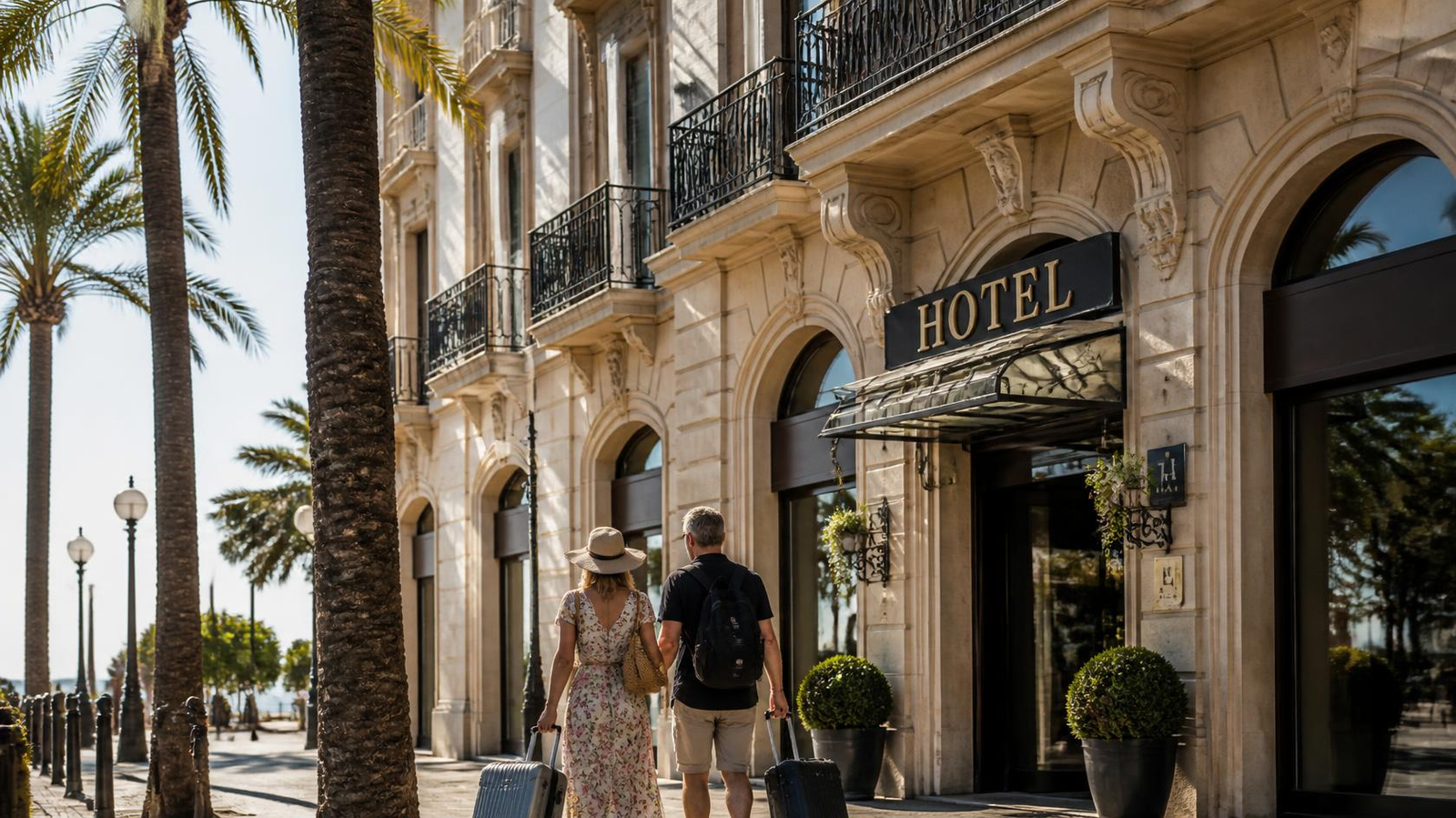
Spain hotel investment sees renewed momentum as hotel prices soar by 28% and occupancy reaches 96% in top destinations like Madrid, Seville, and Palma in September 2026. Discover the latest trends shaping the Spanish hotel market and tourism sector.
Spain’s Booming Hotel Sector: September Sees 28% Price Surge, 96% Occupancy in Major Destinations
The Spanish hotel industry is experiencing unprecedented dynamism, cementing its reputation as one of the most attractive markets for investors and tourism stakeholders in Europe. According to comprehensive new data from eBooking.com, the third week of September 2026 saw hotels in Spain’s major tourist destinations reach near-full occupancy rates, posting a remarkable 27.8% increase in average nightly rates compared to the previous year. Behind these figures lies a confluence of sustained international tourism growth, supply constraints, and evolving consumer behavior, positioning Spain at the forefront of hotel investment opportunities in Europe.
Hotel Occupancy and Price Surges in Leading Spanish Destinations
Spain’s five leading tourist hotspots—Barcelona, Benidorm, Madrid, Palma de Mallorca, and Seville—are reporting outstanding hotel occupancy rates during the week of September 14–21, 2026. The average occupancy rate has soared to an astonishing 96%, representing an increase of almost six percentage points compared to the same period in 2025.
This high demand has pushed average nightly rates in these cities up to €245.4, a year-on-year increase of €53.4 from the €192 registered in 2025. According to Toni Raurich, director of eBooking.com, this escalation is primarily attributed to low last-minute availability, which drives travelers to book higher-priced options due to scarcity in the market.
City-by-City Breakdown: Where Growth Is Most Explosive
Seville and Madrid Lead the Pack
While all five cities have experienced positive momentum, Seville and Madrid have emerged as clear front-runners both in price hikes and occupancy rates. Seville, the Andalusian capital, saw the most dramatic percentage jump, with average prices surging by 68%—from €125 to €210 per night—paired with a 97% occupancy rate that signals an almost complete sellout.
Madrid, Spain’s bustling capital and a perennial favorite among both business and leisure travelers, has witnessed the greatest absolute increase, with average nightly rates now at €265, up 60.6% from €165 in 2025. The capital’s occupancy rate stands at 96%, underlining persistent demand despite higher prices and confirming the city’s attractiveness for hotel investors.
Benidorm and Palma de Mallorca: High Prices, High Demand
The popular resort city of Benidorm, famed for its expansive beaches and lively nightlife, recorded the highest occupancy rate (97%) alongside a 53.6% jump in average price, reaching €192 per night. This performance highlights both the enduring appeal of Spain’s coastal destinations and the willingness of travelers to pay a premium for prime locations.
Palma de Mallorca, the capital of the Balearic Islands, has positioned itself as the most expensive city in the sample. The average rate reached €290 per night, a 9.4% increase versus 2025, with occupancy strong at 96%. For investors, Palma continues to be a lucrative market, blending exclusivity and robust international appeal.
Barcelona: Slight Rate Dip, But Stronger Occupancy
Despite the general upward trend, Barcelona stood out as the only city among the five to record a slight decrease in average daily rates—a 3.6% drop to €270. However, the city compensated for this with improved occupancy, which rose four percentage points to reach 94%. This nuance suggests a possible price correction following recent regulatory changes or evolving market dynamics, yet Barcelona remains among the priciest and most sought-after destinations.
The Backbone of Growth: Surging International Tourism to Spain
The feverish demand for accommodations comes against the backdrop of significant growth in international tourist arrivals. The latest figures from Spain’s National Statistics Institute (INE) reveal that the country received over 58.1 million international tourists in the first seven months of 2026—a 4.6% year-on-year increase. Spain’s ambitious target is to welcome as many as 100 million arrivals by year-end, a goal that looks increasingly attainable given robust summer travel trends.
July 2026 was particularly stellar, drawing 11.5 million international visitors, up 4.6% from July 2025. This upswing has had an immediate impact on hotel demand, especially in urban and coastal centers that traditionally attract both leisure and business travelers.
Where Are The Tourists Coming From?
The United Kingdom continues to lead as Spain’s primary international source market, with 11.5 million British visitors recorded by July (+4.6% year-on-year). France remains a significant contributor with over 7.2 million arrivals (+1.2%), while Germany holds strong at nearly 6.9 million, despite a slight 0.5% dip.
The continued strength of the British and French markets is crucial for occupancy in destinations such as Benidorm, Palma de Mallorca, and the Costa del Sol, regions historically favored by these travelers. The return of British families and groups post-pandemic has helped to fill gaps and sustain hoteliers’ margins, particularly during peak seasons.
Economic Impact: Tourism Spending Breaks New Records
The hotel sector’s dynamism is translating to broader economic gains. Between January and July, total spending by international visitors soared to more than €82.054 billion, a 7.8% rise over the previous year. July alone saw tourism revenue touch nearly €18.218 billion, representing a substantial 10.9% year-on-year jump.
This growth isn’t solely a function of visitor numbers. Average spending per tourist in July 2026 hit €1,579—a notable 5.9% increase—while daily expenditure per visitor rose 3.7% to €218. These figures underscore the increasing economic value of each tourist, highlighting opportunities for hoteliers and other tourism operators to upgrade offerings and target high-spending demographics.
Factors Fueling the Hotel Investment Frenzy
1. Unmatched Demand and Low Inventory
Driving the sustained surge in room rates is a mismatch between exceptional demand and a constrained supply of available rooms, especially as last-minute bookings are funneled into higher-tier accommodation. The September data from eBooking.com underlines how travelers, facing limited choices, are propelling luxury and upper-midscale hotel segments to new heights.
2. Market Resilience and Diversification
Spain has demonstrated resilient tourism demand even amid global economic uncertainty. The country’s diversified offering—urban culture in Madrid and Barcelona, sun and sea in Palma and Benidorm, historic charm in Seville—enables it to cater to a broad spectrum of visitors and adapt to changing travel preferences.
3. Policy and Infrastructure Improvements
Recent years have seen significant investment in airport infrastructure, public transit, and regulatory streamlining, especially in cities like Madrid and Barcelona. These efforts are paying dividends by making Spanish destinations more accessible, more navigable, and more attractive for both leisure and MICE (Meetings, Incentives, Conferences, and Events) travelers.
Implications for Investors: Spain Hotel Investment on the Rise
New Opportunities and ROI Potential
The data paints a compelling picture for Spain hotel investment. With sustained high occupancy rates and rapidly rising ADRs (average daily rates), the opportunity for robust returns has rarely been stronger. Cities like Madrid and Seville, in particular, are showing both substantial rate growth (60–68%) and near-full occupancy—conditions ideal for both new developments and value-add renovations.
Meanwhile, Palma de Mallorca’s combination of premium pricing and high occupancy makes it an attractive bet for luxury hotel operators and brands looking to expand footprints in the Mediterranean.
Cautionary Trends: Regulatory and Supply Challenges
Yet, prospective investors should also note emerging regulatory discussions—especially in places like Barcelona, where a push for sustainable tourism has led to tightened rental and hospitality licensing and impacted pricing in the short term. As the market grows, careful attention to local laws and neighborhood sentiment will be ever more critical.
Sustainability and Experiential Demands
Newly arriving travelers—especially from key Western European markets—are increasingly price-insensitive but expect elevated, eco-friendly experiences. The competitive edge is likely to go to operators who invest in sustainable design, tech-friendly guest experiences, and differentiated services that enhance longer stays and repeat bookings.
Future Trends: Outlook for Spain’s Hotel Market
Targeting 100 Million Tourists
If trends hold, Spain is on track to set new records by year-end, potentially surpassing 100 million international arrivals. The core focus for the hotel industry will be on managing capacity, maintaining service quality amid staff shortages, and developing smart pricing strategies to maximize both occupancy and revenue.
Continued Urban and Resort Outperformance
Madrid and Barcelona will remain magnets for international travelers, while coastal and island destinations like Palma de Mallorca and Benidorm will continue to perform, supported by demand for sun, sea, and safety.
Eastern European and Long-Haul Markets
There’s growing evidence that Spain is attracting a broader international profile, with increased marketing to North American, Asian, and Eastern European visitors. Savvy investors will want to monitor arrivals from these regions closely for new demand surges and investment prospects.
Spain’s Hotel Industry—A Hotspot for Growth and Investment in 2026
The Spanish hotel sector is entering 2026 with enviable momentum, as reflected in rapid price growth, sky-high occupancy, and the unwavering appeal of its world-class destinations. Madrid, Seville, Palma de Mallorca, Benidorm, and Barcelona are not just outperforming past records—they’re setting new benchmarks for what is possible in European hospitality.
For global investors and tourism professionals, Spain represents a rare convergence of steadily increasing tourism arrivals, robust spending, and market resilience. Those seeking solid ROI and sustainable growth will find no shortage of opportunity in the heart of Iberia—if they are ready to move decisively.
In summary: Spain’s hospitality scene is hotter than ever, but only those with sharp market insights and a commitment to innovative, sustainable guest experiences will flourish as the country races toward its 100-million-tourist milestone.
For more news and analysis on Spain hotel investment and tourism, stay tuned to our international hospitality insights.
Tags:
Spain hotel investment, Spain tourism, hotel prices Spain 2026, Madrid hotels, Seville hotel market, Barcelona occupancy, Palma de Mallorca tourism, Benidorm hotels, hotel industry trends Spain, international tourism Spain, eBooking data