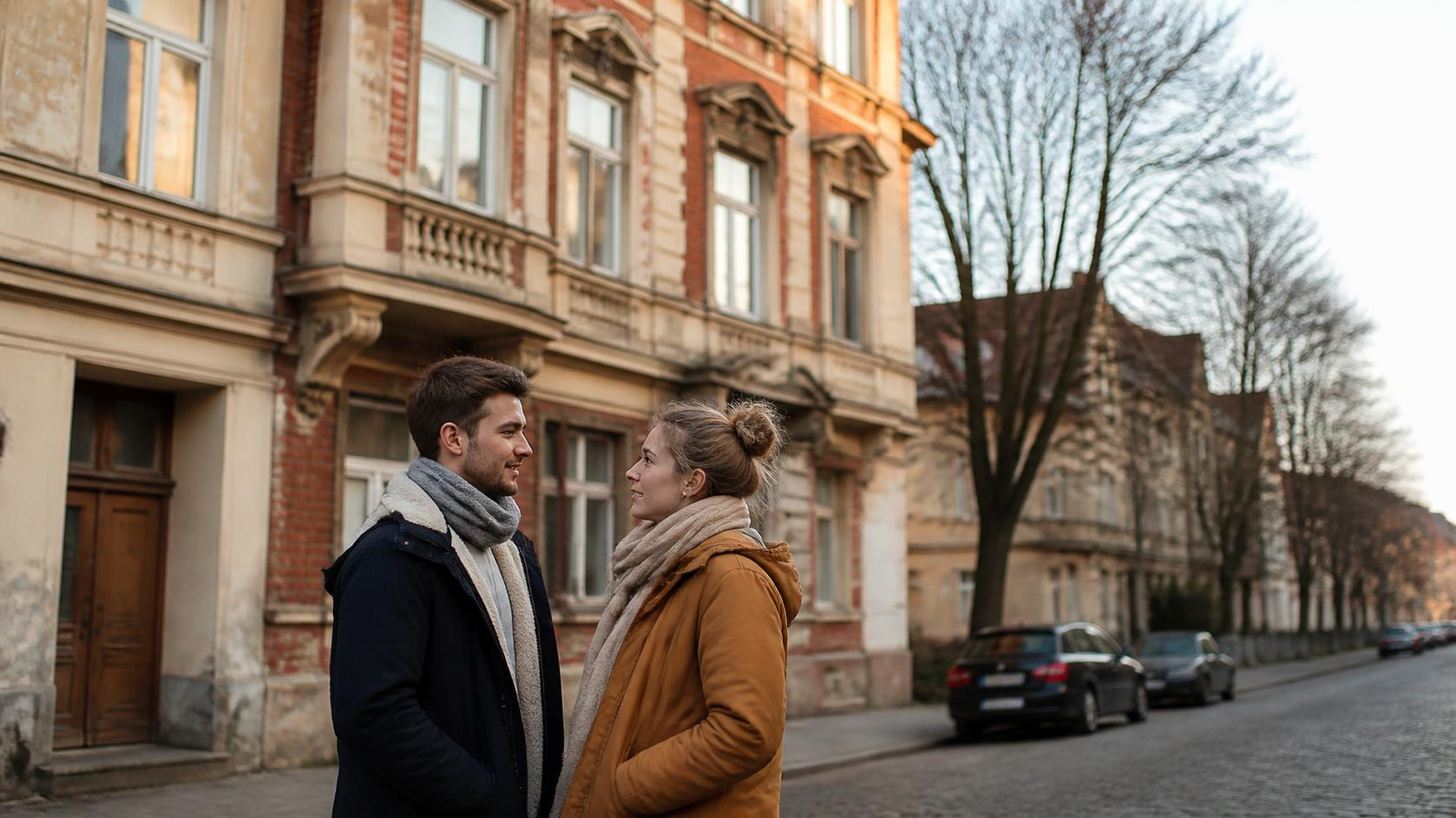
Young buyers under 36 are transforming German real estate trends by focusing on older properties and budgeting for renovations. Discover what’s driving Gen Z and Millennials in today’s Germany real estate market and what this means for sellers and investors in 2026.
Germany Real Estate Market in 2025–2026: How Young Buyers and the Silver Tsunami Shape the Future
The Germany real estate market, long an epicenter of stability and conservative change, is gearing up for seismic shifts between 2025 and 2026. As Gen Z and Millennials carve out their paths to home ownership—and Baby Boomers prepare to flood the market with inherited or sold properties—the fabric of property ownership, value, and energy efficiency in Germany is in flux. This comprehensive report dissects the latest data from Europace and other leading analysts, offering a data-driven vantage point on where the market stands and what lies ahead.
Young Buyers: Gen Z & Millennials Drive Demand for Older Properties
A formidable trend is underway: Germans under 36 are disproportionately likely to finance older residential properties. According to data from the fintech platform Europace, nearly one out of three young buyers incorporate a modernization budget—around €40,000—into their property purchases. This isn’t just a statistic; it’s a signal for sellers, agencies, and renovators that a vast market of motivated, renovation-minded buyers is not just present, but growing.
What’s fueling this trend?
- Affordability Constraints: Younger buyers frequently have smaller budgets and are, therefore, drawn to older, less efficient housing stock.
- Modernization Opportunity: Many see upgrading as a way to enter the market at a better price point, with long-term gains tied to energy efficiency and comfort.
Data Deep Dive:
Europace’s analysis, which covers mortgage and financing transactions from January 1, 2025, to July 31, 2026, reveals that younger buyers are more likely than ever to invest in properties requiring renovations—frequently built in the 1960s and earlier.
Energy Efficiency: A Young Buyer’s Challenge
The Younger the Buyer, the Lower the Energy Class
Energy efficiency is a growing focal point in the German real estate market, especially amid rising environmental consciousness and escalating utility costs. Yet, the reality is stark for the youngest buyers:
- Buyers under 25: 35.2% of properties financed are classified as energy efficiency classes F, G, or H (the lowest tier).
- Age 26–30: 32.3% in F, G, or H.
- Age 31–36: 31.2% in F, G, or H.
Conversely, the proportion of highly efficient homes (classic A+ or A) increases with age:
- 10.9% for buyers under 25,
- Up to 18.7% for those aged 31–36.
What does this tell us? The lower financial power of younger buyers forces many to settle for properties needing upgrades—a challenge when weighed against tightening regulatory frameworks and future resale value.
Purchase Prices and Modernization Budgets
The Europace analysis also highlights a strong correlation between energy class and purchase price:
- Under 25: The average property financed is worth about €251,000.
- Ages 31–36: Buyers spend roughly €333,000 on average.
- Efficiency and Price: The homes of the youngest buyers are, on average, built in 1963. Properties built before 1949 rarely meet higher efficiency standards (just around 2% achieve class A+ or A), while 69% of post-2020 builds are highly efficient.
When it comes to renovations:
- Youngest group: 19.3% of the property price is allocated to modernization.
- Ages 31–36: 17.6% set aside for improvements.
- Median modernization budgets: €40,000–€48,000.
The data underscores that the youngest buyers, while the most cash-strapped, invest the highest proportion of their total outlay into upgrading their new homes.
How Energy Efficiency Sways Property Prices
Energy Classes Aren’t Created Equal
Energy efficiency isn’t just a green issue; it’s pivotal to valuation. Europace’s data reveals:
- Median price for A+ homes: ~€465,000
- Median price for D class homes: ~€257,000
However, this difference isn’t solely attributed to insulation or new heat pumps; A+ homes tend to be newer, larger, and often in more desirable locations. To level the field, the price per square meter is critical:
- A+ class: €3,919/m²
- H class: €1,877/m²
The discount for low energy efficiency is clear, affecting not only market value but also the cost of financing and future resale prospects.
Renovation Plans—a Statistical Note
Calculated modernization budgets stem from mortgage requests, not always actual expenditures. While about one-third of young buyers allocate funds for upgrades, follow-through depends on a mix of successful credit approvals, rising construction costs, and evolving personal circumstances.
Climate Change: Heatwaves and Their Impact on Prices
The summer of 2026 is likely to be remembered not only for record-breaking temperatures but also for its subtle yet significant impact on property prices.
Key Finding:
An independent analysis by Value AG shows real estate in areas exposed to more heat (around nine extra hot days per year) experienced a 1.4% dip in relative price levels from 2021 to 2026—for each standard deviation of heat exposure.
- Energy Certificates: Make homes comparable for buyers and lenders.
- Missing Metrics: Heat protection, critical amid climate change, isn’t directly reflected in energy classes—but may increasingly influence buyer decisions.
As summers grow hotter across Germany, properties lacking adequate cooling or heatproofing could face steeper discounts in the years ahead.
The Structural Shift: The Approaching Silver Tsunami
What Is the ‘Silver Tsunami’?
Between 2040 and 2050, a wave of Baby Boomer-owned homes—dubbed the “Silver Tsunami”—is expected to hit the market. According to Jacasa, a leading real estate portal, Baby Boomers own a staggering 32% of Germany’s residential properties.
Why does this matter?
- Supply Surge: A generational handover means thousands of homes—many in rural or less-populated areas—will be up for sale.
- Price Pressure: As supply potentially outpaces demand, especially outside urban centers, downwards pressure on prices is likely.
- Regional Variance: Cities and rural areas will experience the effects differently depending on local demand and job markets.
Baby Boomer Home Ownership by Region
Leading Cities and States:
- Cities: Leipzig (80% of owner-occupied properties are Boomer-owned), Berlin (77%)
- States: Mecklenburg-West Pomerania (39.7%), Saxony (39.5%), Brandenburg, Saxony-Anhalt, Thuringia (>34%)
Districts to Watch:
- Uckermark (Brandenburg): 47.7% of owner-occupied units are Boomer properties—about 13,000 homes potentially entering the market soon.
- Ennepe-Ruhr (North Rhine-Westphalia): 44.9% boomer-owned units.
- Meißen (Saxony): 44.4%.
Most high-percentage districts are in eastern Germany, underscoring demographic and historic disparities.
Bottom of the Index:
The Bitburg-Prüm district (Eifel region) has only 24.9% of homes in the hands of Baby Boomers—a comparatively muted “tsunami” effect.
The Silver Tsunami Index: Methodology Insights
Jacasa’s index leverages rigorous demographic and property data:
- Source Data: Combined census, population, and homeownership rate statistics (including from Destatis and regional offices).
- Assumptions: Not all Baby Boomers own property—an estimated 57% homeownership rate is applied.
- Household Calculation: Average Baby Boomer household size is 1.6 people (reflecting the aging population and trend toward two-person or single-person households).
- Inheritance Note: Statista estimates about 40% of Baby Boomer homes will be inherited rather than sold outright, reducing the theoretical supply impact.
Market Strategies & Investment Implications
For Buyers
- Opportunity in Rural Regions: As supply increases—especially post-2040—young buyers and investors may secure favorable prices, particularly in less-urbanized districts.
- Insulation & Renovation: Properties with poor energy ratings can be bargains if buyers are prepared for the costs (and funding options) of upgrades.
For Sellers
- Timing is Everything: Baby Boomer sellers are advised that postponing a sale could mean competing in an oversupplied market, especially outside of major urban centers.
- Modernization for Value: Upgraded energy efficiency can boost both market price and buyer interest—an advantage in an increasingly competitive field.
For Policymakers
- Energy Retrofit Incentives: To ease the pressure on younger buyers, policies that subsidize or incentivize energy upgrades could be pivotal.
- Preparation for Inheritance Surges: The legal and financial system may need streamlining to manage the coming waves of property inheritance.
Challenges and Opportunities Going Forward
- Energy Crisis & Inflation: As energy regulation tightens and inflation persists, both the cost and value of property upgrades are likely to rise.
- Climate Adaptation: Measures to equip older housing stock for more extreme weather could become requirements, changing the economics of “fixer-upper” homes.
- Demographic Shifts: The age structure of property owners is changing. Where vast numbers of properties enter the market simultaneously, regions that fail to attract new buyers could see values drop sharply.
The Germany Real Estate Market in Transition
Between 2025 and 2026, a new generation of German home buyers is reshaping demand—often out of necessity, purchasing older, less energy-efficient homes and facing overlapping pressures of affordability, renovation, and climate adaptation. Meanwhile, the shadow of the “Silver Tsunami” looms, promising to flood many regional markets with legacy properties as the Baby Boomer population ages.
Smart buyers—and sellers—will factor in both energy efficiency and local demographic trends to make timely, value-driven decisions. The next decade promises to reshape the landscape of the Germany real estate market, with modernization, climate resilience, and demographic shifts as the key battlegrounds.
Stay tuned for updates and expert analysis as Germany’s real estate market continues to evolve.
References:
- Europace AG: Housing Finance Data
- Jacasa: Silver Tsunami Index
- Value AG: Climate Risk Impact Reports
- Destatis and Regional Statistics Agencies
- SOEP Study, Statista, Germany Atlas
Tags:
Germany real estate market, German property trends, Gen Z home buyers, Millennials property, energy efficiency, modernization budget, baby boomer homes, Silver Tsunami, real estate price trends, property renovation Germany