
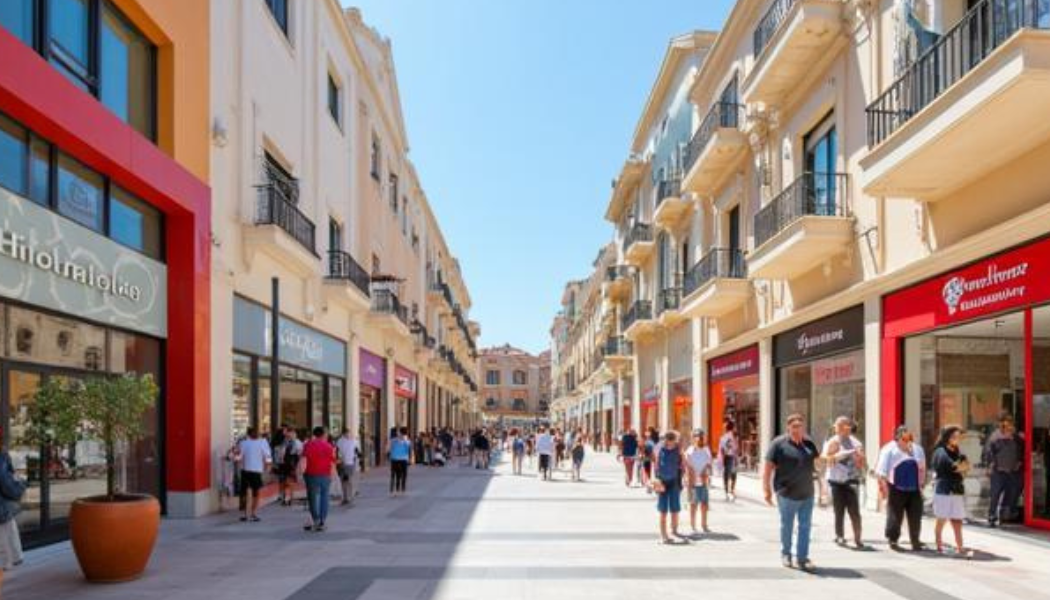
Banco Santander and Merlin Properties are assessing a €1.6bn acquisition of the Balkany family’s nine Spanish shopping centres — a major real estate investment in retail.
Lead
Banco Santander and the listed real estate investment trust (REIT) Merlin Properties are reported to be in preliminary talks to acquire a portfolio of nine shopping centres in Spain owned by the Balkany family, in a transaction valued at roughly €1.6 billion. The initial information was advanced by Cinco Días and confirmed by Efe through industry sources. If completed on the reported terms, the deal would rank among the largest retail-sector transactions in Spain in recent years, and would be a major real estate investment headline for both the Spanish and broader European property markets.
Deal overview: advisors, phase and competing bidders
The Balkany family engaged Morgan Stanley and BNP Paribas last year to advise on a sale of their retail portfolio, managed through Sociedad General Inmobiliaria de España (LSGIE). Sources indicate the process is at an early stage: non-binding interest is being gauged and no definitive or binding offers have been submitted. Market reports list several other parties said to be analysing the opportunity, including French mall operator Klépierre, institutional investor Norges Bank, real estate investors Orion and Nepi, the asset manager Six Street, and Spanish bank Bankinter.
The portfolio: nine shopping centres concentrated in Spain
The properties involved are a focused cluster of nine well-known shopping centres across the Madrid region and other strategic Spanish catchments, operated under LSGIE. They include:
•   La Vaguada
•   Gran Plaza 2
•   Gran Vía 2
•   Plaza Loranca 2
•   Plaza Norte 2
•   Plaza Río 2
•   La Villa 2
•   Plaza Mar 2
•   Plaza de la Moraleja
These centres have long-standing market recognition, prime location credentials in many cases and tenant mixes anchored by national and international retail chains. Their combined valuation at around €1.6bn reflects both the physical assets and the income streams they generate, making the package attractive for investors focused on steady retail cash flows and potential repositioning upside.
Why Santander and Merlin could be considering this real estate investment
Several strategic rationales could explain why a major bank like Banco Santander and a large REIT like Merlin Properties would consider participating in or supporting such an transaction:
•   Scale and strategic footprint: Acquiring nine centres at once would rapidly boost geographic and asset-class scale for an owner, strengthening market position in Spain’s retail landscape. For Merlin, which already owns a diversified portfolio of offices, logistics and retail, the deal could deepen its retail holdings. For Banco Santander, involvement could be financial (loan, participation) or strategic, leveraging real estate exposure to optimize balance-sheet returns.
•   Predictable income streams: Shopping centres with stable occupancy and long-term leases provide recurring cash flow attractive to investors seeking steady yield, especially within core real estate allocations.
•   Repositioning and asset management upside: Buyers often see opportunities to improve merchandising mixes, reconfigure space for entertainment, food & beverage, or omni-channel logistics (click-and-collect hubs), raising footfall and rental income.
•   Defensive diversification: As interest rates and macro volatility change, high-quality real estate assets can act as a portfolio diversifier. For institutional investors, retail assets with solid locations remain part of balanced real estate investment strategies.
Market context: Spanish retail real estate in 2026
The Spanish retail sector has experienced a period of transformation driven by shifting consumer behaviour, e-commerce growth, and a post-pandemic rebound in physical retail footfall. While some centres, particularly those in secondary locations, have faced vacancies and tenant churn, prime assets with strong catchment demographics and an active leasing and experiential program have shown resilience.
Investment appetite for Spanish retail assets has re-emerged as yields stabilise and investor confidence returns. International capital — from pension funds to specialist REITs — has been active in seeking high-quality retail and mixed-use assets, often competing with domestic groups and banks. A €1.6bn package would be one of the headline-grabbing transactions in a market characterised by selective appetite and emphasis on asset quality.
Transaction mechanics: process, timelines and financing options
According to market practice, the sale would progress through several stages:
•   Initial information memorandum and market sounding (already under way, per reports).
•   Non-binding offers and exclusivity selection: interested parties submit indicative bids and selected bidders gain access to a dataroom.
•   Due diligence: commercial, legal, environmental and technical reviews.
•   Binding offers and negotiation of sale and purchase agreement.
•   Regulatory approvals (if applicable), financing arrangements and closing.
Financing for a transaction of this size can involve a mix of equity (from buyers or partners) and debt (bank loans, bonds, or structured financing). For REITs like Merlin, a combination of cash reserves, asset recycling and capital markets issuance may be used; banks like Santander could choose to participate via direct acquisition, structured financing, or by facilitating syndicated loans for buyers.
Valuation perspective: what a €1.6bn price tag implies
A total valuation of €1.6bn for nine centres suggests an average asset value of roughly €178m, although individual assets will vary widely by size, location and income. Investors will focus on net operating income (NOI), occupancy rates, weighted average lease term (WALT), and tenant mix when assessing yield and payback.
To illustrate: if investors target a core retail yield of 4.5–6.5% depending on asset quality, a €1.6bn portfolio could imply aggregate annual NOI in the range of approximately €72m to €104m. Exact numbers would depend on market cap-rate assumptions and any prospective asset management plans. Buyers will weigh the risk-adjusted yield versus alternative real estate investment opportunities across offices, logistics and residential segments.
Competing bidders and strategic positioning
The list of interested parties signals broad interest from both operators and institutional investors:
•   Klépierre: a European mall specialist that could see scale benefits and synergies if integrating these Spanish centres into its portfolio.
•   Orion and Nepi: opportunistic and core-plus investors, respectively, looking for stable income and possible asset repositioning.
•   Norges Bank: long-term institutional capital with appetite for core real estate investments.
•   Six Street and Bankinter: may be pursuing diversified strategies — from direct investment to providing acquisition financing.
The diversity of bidders indicates that the asset package appeals to different strategic approaches: operators that can extract operational synergies, and long-term investors seeking predictable cash yields.
Risks and challenges for a major retail real estate investment
While prime shopping centres can offer attractive returns, buyers will scrutinise several risks:
•   Retail demand and tenant resilience: Retailers continue to adapt formats; anchor tenants’ strength and small-retailer health vary. Lease renegotiations and retailer bankruptcies can impact cash flow.
•   E-commerce and omnichannel disruption: The best malls adapt with experiential offerings and digital integration; secondary centres face pressure.
•   Financing costs: Higher interest rates increase borrowing costs, affecting leveraged returns and the affordability of large transactions.
•   Regulatory and planning hurdles: Any redevelopment or expansion plans require local approvals; environmental remediation or refurbishment obligations can add costs.
•   Concentration risk: A single-portfolio acquisition concentrates exposure to one family of assets, increasing operations and leasing complexity.
Impact on tenants, employees and local economies
A change in ownership can have multiple downstream effects:
•   Tenants may see more active asset management, potentially improving retail mix and services that increase footfall.
•   Redevelopment and modernization plans could create short-term disruption but longer-term opportunities for new retail concepts and employment during construction and ongoing operations.
•   Local economies may benefit if investment drives higher footfall and consumer spending in retail districts, but community stakeholders will watch for any rent pressures that could impact small retailers.
Why the Balkany family chose to market these centres now
The reasons for putting a prominent retail portfolio to market may include portfolio rationalisation, generational wealth planning, capital recycling to other investments, or a strategic decision to realise value in a market where demand for core retail assets has improved. Engaging global advisors Morgan Stanley and BNP Paribas signals the family’s intent to attract institutional capital and run a competitive sales process.
Possible deal structures and strategic alternatives
Buyers may pursue several acquisition structures:
•   Single-buyer acquisition: One investor acquires the entire portfolio, taking full control and operational management.
•   Joint-venture: Two or more investors partner, combining capital and asset-management skills (e.g., a REIT team with an institutional fund).
•   Partial sale: The portfolio could be split and sold in lots to different buyers to maximize proceeds.
•   Structured financing: Santander or another bank could underwrite a loan or provide a bridge facility, enabling buyers to pursue the acquisition with leverage.
Each structure has trade-offs: single-buyer control versus risk concentration; joint ventures allow risk-sharing but require governance agreements; splitting the portfolio can unlock higher aggregate value but complicates the process.
Regulatory and antitrust considerations
Large real estate transactions in Spain typically require due diligence on land use, planning, and compliance with local regulations. Antitrust scrutiny is generally more focused on competition for retail chains rather than ownership per se, but potential buyers will conduct regulatory checks, especially for any future redevelopment plans that might affect local planning or retail competition.
What the potential transaction means for Spain’s real estate investment climate
A successful sale at or near the €1.6bn valuation would be a signal that institutional and strategic capital continues to view Spain’s retail sector as investible, provided assets meet criteria for location, tenant mix and modernization potential. It would also underscore the market’s liquidity for large, quality portfolios and could trigger further activity as investors seek comparable opportunities.
Timeline and next steps
Current reports describe the process as preliminary. Practical next steps are likely to include:
•   Further market sounding and indicative bids from interested parties.
•   Selection of a shortlist by the sellers and the advisors (Morgan Stanley, BNP Paribas).
•   Access to a dataroom for shortlisted bidders to conduct deeper analysis.
•   Submission of binding offers, negotiation and selection of a preferred bidder.
•   Closing, subject to financing and any regulatory approvals.
Given the size and complexity, a full sales process could take several months to a year from the initial market approach to completion, depending on due diligence findings and financing timelines.
The reported interest by Banco Santander and Merlin Properties in the Balkany family’s €1.6bn portfolio of nine Spanish shopping centres highlights a pivotal moment for retail real estate investment in Spain. With Morgan Stanley and BNP Paribas advising the sellers and a wide range of potential buyers circling the assets, the process is poised to attract significant market attention. The deal encapsulates both the opportunities and challenges facing modern retail assets: the potential for stable income, asset enhancement and repositioning, counterbalanced by evolving consumer habits and financing dynamics.
For investors and market watchers, the outcome will be a bellwether: a high-value transaction could catalyse further capital flows into Spanish retail and signal that prime physical retail — when actively managed and modernised — remains a core component of diversified real estate investment strategies. For tenants, employees and local economies tied to these shopping centres, any change of ownership will be closely monitored for signs of renewed investment, strategic repositioning and long-term sustainability.
Note: This article is based on information reported by Cinco Días and confirmed by Efe, and reflects market commentary and typical transaction practices. At the time of publication, the sale process was reported to be at an early phase without binding offers. Further developments should be followed through official announcements from the parties involved and regulatory filings.
tags: real estate investment, Banco Santander, Merlin Properties, LSGIE, Balkany family, shopping centres Spain, Spanish retail, Morgan Stanley, BNP Paribas, Klépierre, Orion, Nepi, Norges Bank, Bankinter