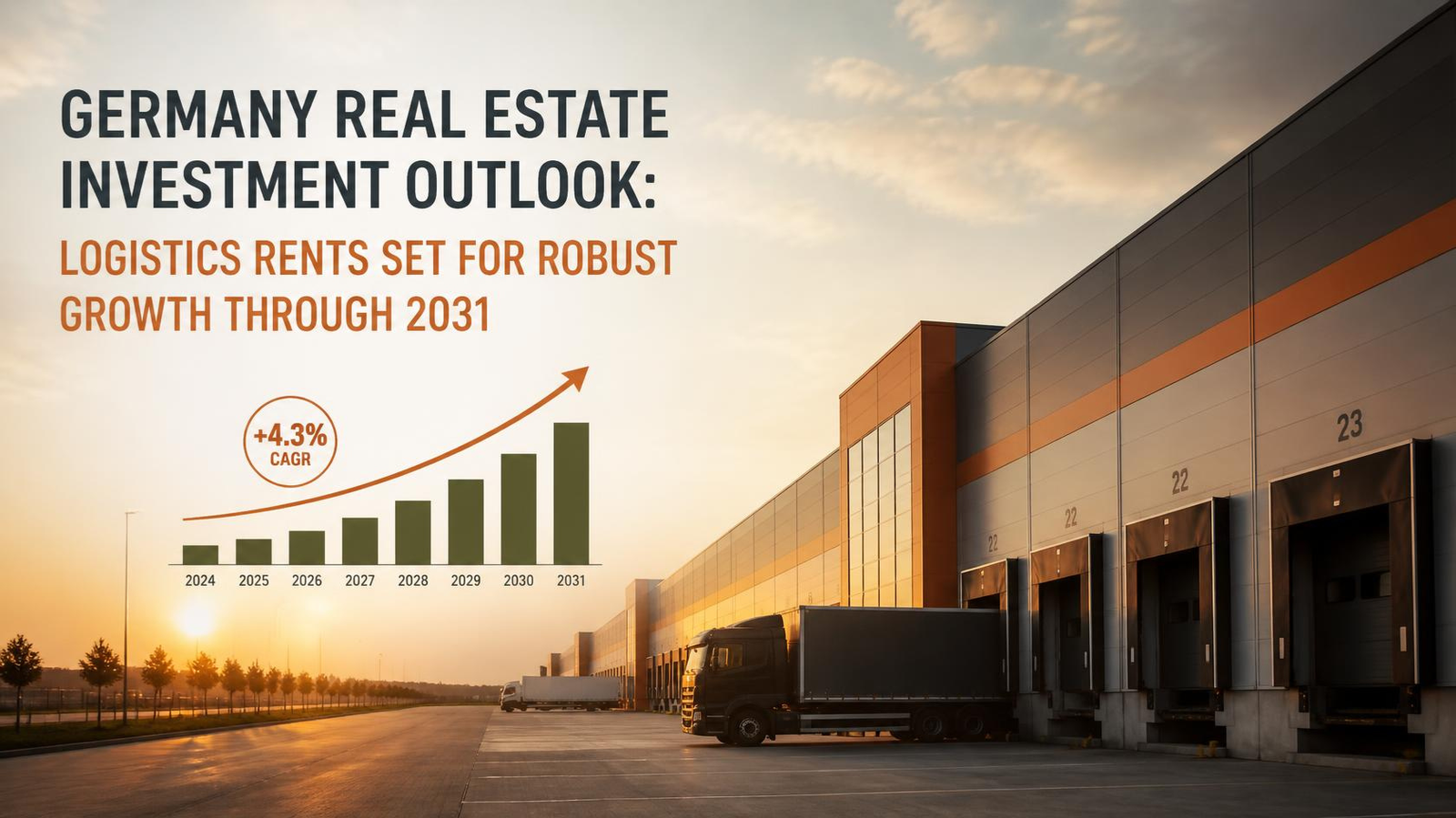
Germany’s real estate investment in logistics is forecast to see above-average rent growth until 2031, with Munich leading the way. Discover key trends, market performance, and investment insights for German logistics property investors.
Germany Real Estate Investment Outlook: Logistics Rents Set for Robust Growth Through 2031
The Germany’s real estate investment landscape, particularly in the logistics sector, is set to experience notable growth over the coming decade. According to the latest Garbe Pyramid Map, logistics rents in Germany are projected to increase by an average of 2.1% annually until 2031, ranking the country second only to the UK within Europe in terms of rental growth. Notably, Munich emerges as the continent’s top-performing logistics market with a projected annual rent growth rate of 3.2%. This upward rental trajectory presents compelling opportunities and considerations for investors eyeing Germany’s logistics property sector.
Unpacking the key findings from the Garbe Industrial’s latest European logistics forecast, explores the drivers behind Germany’s strong performance, compares it with other major European markets, and outlines the strategic implications for property investors.
Germany and UK: Leading Logistics Real Estate Rental Growth in Europe
The European logistics property market is poised for a phase of moderate but selective recovery through 2031, marked by regionally distinct trends in rent and yield. According to Garbe Industrial’s collaboration with Oxford Economics, spanning 88 logistics regions across 122 European hotspots, both Germany and the UK stand out for their dynamic rental growth—2.1% and 2.3% annual increases respectively—weighted by logistics floor space.
Germany’s Prime Logistics Markets
- Munich: The city leads not only Germany but the entire continent with a forecasted 3.2% rent increase per year until 2031. Munich’s logistics sector is also characterized by the tightest prime yield (currently 4.5%), reflecting strong demand relative to supply.
- Berlin City: Close behind, Berlin City is projected to see an impressive 3.0% annual rent growth, with strong yield compression signaling the market’s robust fundamentals.
- Market Representation: Among the top 30 European logistics locations for rental growth, ten are German, highlighting the country’s strategic importance on the continent.
The UK’s Strong Position
- Manchester: The UK demonstrates comparable vigor, with Manchester expecting an annual rent growth of 3.1%, the second highest in Europe.
- Inner London: While rental growth is robust, Inner London is notable for having seen prime yields rise by 140 basis points since Q2 2021, setting the stage for future rental escalations.
Yield Compression and Prime Rents: What Do They Mean for Investors?
Understanding Yield Compression
Yield compression—when property yields decrease while asset prices rise—signals increased investor competition and confidence in future rental income projections. The Garbe Pyramid Map foresees average prime yields in Europe shrinking from 5.3% to 5.1% over the next five years, equating to a 26-basis-point compression. For star performers like Munich, Manchester, and Berlin City, the compression could be as notable as 40 basis points.
Impact on Investment Returns
While yield compression generally hikes asset prices and reduces initial yields, it often precedes or occurs alongside periods of robust rental growth. For German real estate investors, the current and upcoming climate suggests a window where logistics properties may deliver both capital appreciation and rising rental income—a dual benefit for medium- and long-term investors.
Germany vs. Other European Logistics Markets: Key Comparisons
Poland: Growth Potential Amidst Vacancy
- Rental Growth: Poland is projected to see average logistics rent growth of 1.7% per year between 2026 and 2031, with yield compression of 22 basis points.
- Vacancy Buffer: The market retains resilience due to a vacancy “buffer,” meaning supply is still sufficient, although certain regions are tightening.
- Investment Note: As vacancies decrease, entry-level pricing and availability will increasingly govern market dynamics and entry strategies.
Italy: Scarcity, Varied by Submarket
- Rental Growth: Italian logistics markets anticipate an average of 1.6% annual rent growth and 15 basis points of yield compression for 2026–2031.
- Regional Differences:
- Milan leads with a 2.1% growth rate, while Genoa follows at 2%. Markets like Piacenza and Turin post significantly lower increases (1% and 0.8% respectively).
- Space Shortage: National vacancy averages about 3.7%, though some submarkets approach zero, intensifying competition for quality sites.
Lessons for Investors
The market profile across Europe demonstrates that not all regions or cities offer equal opportunity. Entry-level prices, space availability, and local economic health are increasingly critical for location choice, portfolio diversification, and risk management.
The Structural Challenges Driving Rental Growth
Construction Costs, Financing, and Development Pressures
Across most European markets—including Germany—high construction, financing, and development costs persist as significant headwinds. These factors limit the economic feasibility of new logistics developments, despite consistent or increasing demand for space due to e-commerce, supply chain optimization, and ongoing re-industrialization efforts.
Decline in New Construction
With new development declining, the available supply of logistics spaces is gradually tightening in major markets, acting as a catalyst for higher rental rates. While a continent-wide shortage is not yet apparent, regional patterns suggest a looming supply deficit if rental growth does not accelerate sufficiently to support further construction.
The Avoidance of a Structural Supply Deficit
The report concludes that unless rents rise more sharply, a widespread structural supply deficit could materialize in the medium term. For investors, this implies that logistics property acquisitions today are positioned for stronger capital and rental income appreciation as new supply diminishes and demand remains robust.
What Makes German Logistics Real Estate Attractive?
Fundamentals Supporting Long-term Value
Germany’s logistics property market benefits from a powerful combination of:
- Strong Macro-Economic Fundamentals: With Europe’s largest and most export-driven economy, Germany continues to attract global supply chain operators and manufacturers.
- Central European Hub Status: Its central location makes it integral to regional transshipment, distribution, and last-mile delivery networks.
- Stable Socio-Political Environment: Investors value Germany’s mature legal framework, regulatory clarity, and market transparency.
Key Drivers of Rent and Yield Performance
- Demand for Last-Mile Delivery: Rising e-commerce volumes boost demand, especially in urban areas like Munich and Berlin.
- Limited Supply of Prime Assets: Tight zoning laws, land scarcity, and high redevelopment costs constrain new supply, underpinning rental growth.
- Yield Compression: As above-average rental growth sets in, investor appetite drives down initial yields, especially in cities with strong demographics and vibrant business ecosystems.
Munich: The Star Performer of German Logistics Real Estate
Market Overview
- Rental Growth: Forecast at 3.2% annually until 2031—the highest across all analyzed European logistics regions.
- Yield Profile: Lowest prime yield in the study at just 4.5%, indicative of significant investor confidence.
- Investment Implication: Investors in Munich logistics assets stand to benefit from both robust income growth and secure capital values, albeit with fierce competition and high entry prices.
Comparison with Other German Cities
- Berlin: Strong growth (3.0%), low yield, high demand but slightly higher risk from project development pipeline.
- Frankfurt, Hamburg, Stuttgart: Not as stellar in growth rates as Munich, but remain attractive given Germany’s overall positive rental trajectory.
Risks and Considerations: What Should Investors Watch For?
Supply-Demand Imbalances
- Short to Medium Term: Some regions have adequate space, providing entry points at current prices. But, with declining construction, select submarkets may tip into undersupply, leading to sharper-than-expected rent hikes and capital appreciation.
- Long-Term Risks: Should macroeconomic headwinds arise or e-commerce growth slow, rental growth expectations may moderate. However, the structural trends remain bullish.
Location Selection
- Micro-Location Factors: Even within growth markets like Germany, investor outcomes depend on careful location choices, tenant creditworthiness, lease lengths, and asset specifications.
- Divergence Among Regions: Subregional divergences—such as between central Munich and outer markets or between Milan and Turin—underscore the need for diligence and market insight.
Regulatory and Cost Factors
- Development Costs: High and potentially rising, which can either squeeze profits on new builds or further limit future supply.
- Interest Rates: Financing environment could affect acquisition yields and return profiles, though core logistics markets are generally more resilient.
Strategic Insights: Capitalizing on German Logistics Real Estate Growth
Buy-and-Hold Strategies
With solid rental growth prospects and yield compression, long-term buy-and-hold strategies in prime German logistics markets (e.g., Munich, Berlin) appear increasingly attractive. Robust tenant demand and constrained new supply create favorable leasing and asset value growth conditions.
Value-Add and Development
Given selective supply shortages, investors with development capabilities or those targeting modernization/refurbishment of older logistics assets could leverage rent reversion and enhance returns. However, cost management and regulatory navigation will be essential.
Portfolio Diversification
A pan-European approach, integrating Germany’s top rental growth markets with up-and-coming locations in Poland, Italy, and the UK, can help balance risk, capture outperformance, and build resilience against local downturns.
Outlook for German Logistics Real Estate Investment
The German logistics real estate market is poised for robust, above-average rental growth through 2031, led by standout markets such as Munich and Berlin City. With yield compression signaling sustained investor confidence and supply-side constraints driving upward pressure on rents, Germany presents one of Europe’s most attractive investment destinations for logistics and industrial property.
However, as regional disparities grow and development costs remain elevated, investors must exercise shrewd market selection, rigorous due diligence, and proactive asset management to unlock the best opportunities. Macro fundamentals, booming e-commerce, structural supply shortages, and Germany’s unrivalled centrality in the European logistics network all combine to create a fertile investment environment.
Key Takeaway:
For investors seeking resilient, income-producing assets with strong growth prospects, German logistics real estate should remain a core component of any European or global real estate strategy through 2031 and beyond.
For more insights on Germany real estate investment, market trends, and industrial property strategies, stay tuned to our dedicated coverage.
Tags:
Germany real estate investment, German logistics market, logistics rents Germany, property investment Germany, industrial property Europe, commercial real estate, yields Germany, Munich logistics market, European logistics trends, Garbe Pyramid Map, logistics property forecast, real estate market analysis Germany