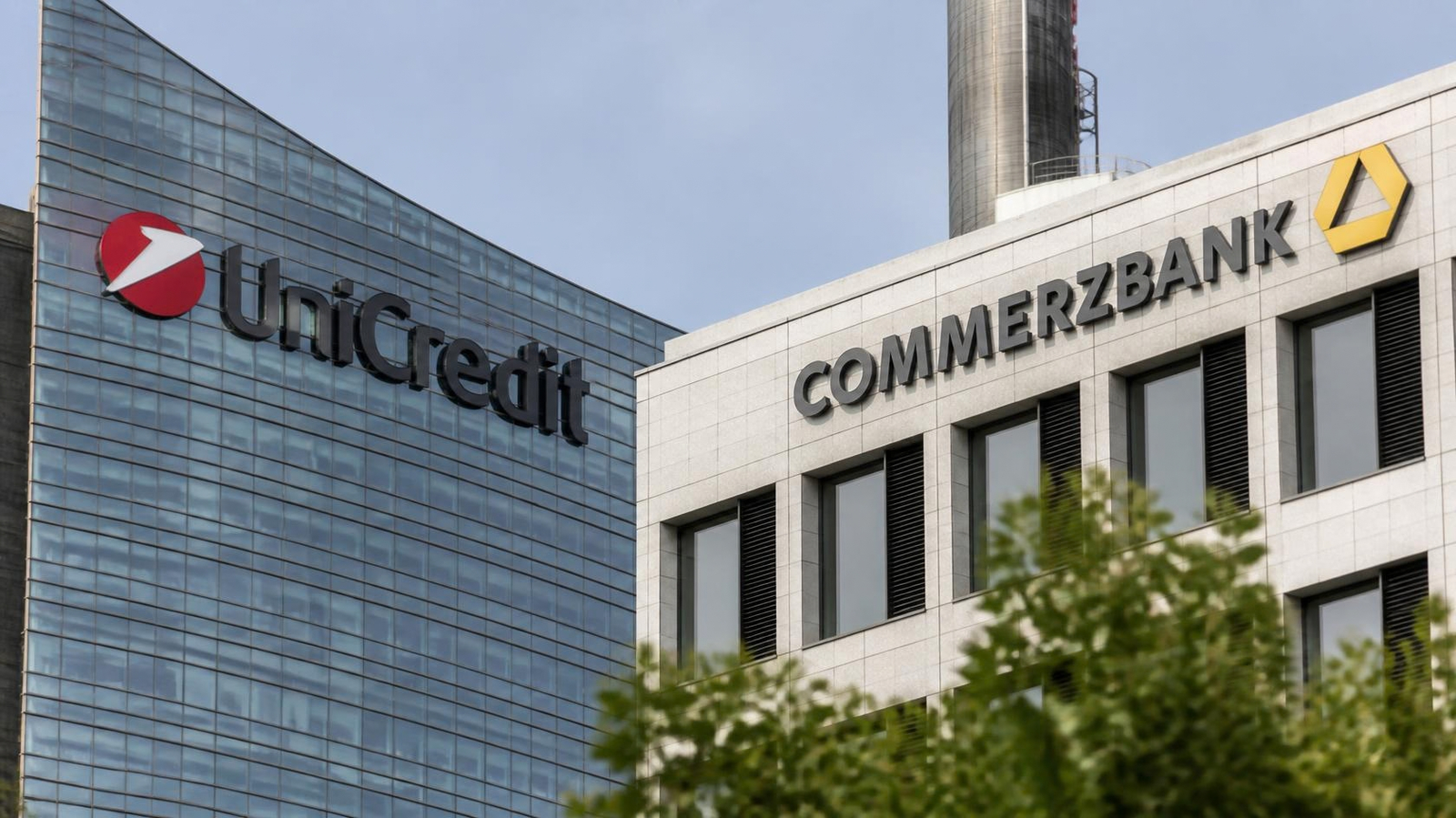
UniCredit, the prominent Italian bank, is expediting its acquisition of Commerzbank and could secure majority control as early as January or February 2027. Discover the latest updates on this significant European banking move and what it could mean for the financial sector.
Italian Bank UniCredit Accelerates Commerzbank Takeover: Major Leadership Changes & Job Cuts Expected by Early 2027
In a dramatic new twist to the European banking landscape, Italian bank UniCredit is reportedly fast-tracking its planned takeover of Commerzbank, Germany’s second-largest listed bank. According to insiders and several prominent news outlets, UniCredit could secure formal control of Commerzbank as early as January or February 2027—months ahead of earlier expectations.
The accelerated timeline signals UniCredit’s urgency and strategic confidence in reshaping Commerzbank’s future. However, it also heralds potentially major upheaval: up to 7,000 job cuts are planned in Germany alone, and €20 billion in non-core corporate loans abroad face divestment or reduction.
UniCredit’s Ambitious Push: The Quickening Pace of Takeover
Background: A Transforming European Banking Sector
The past several years have seen Europe’s lenders grappling with persistently weak margins, slow economic growth, and relentless digital disruption. Amid these challenges, consolidation has come to the fore as a path toward regaining scale, efficiency, and profitability. For Italian bank UniCredit, Germany’s Commerzbank presents both a challenge and an irresistible opportunity.
UniCredit’s stake in Commerzbank, now at 47.6%, has placed it tantalizingly close to outright control. The Italian bank’s overtures have intensified over the past year as cross-border consolidation gains regulatory and political support in the EU, with a focus on creating “European champions” to stand up to US and Chinese banking behemoths.
Timeline Acceleration: From Q2 to Early 2027
Previously, observers expected a drawn-out process, with a takeover in the second quarter of 2027. Now, sources from Financial Times and Handelsblatt confirm an accelerated timeline, targeting January or February 2027 depending on final regulatory clearances.
“The takeover battle for Commerzbank is entering its final stages much sooner than expected,” says one insider familiar with UniCredit’s internal planning.
If realized, this would represent one of the largest cross-border banking acquisitions in recent European history, with UniCredit gaining a new foothold in Germany—the EU’s economic powerhouse.
Extraordinary General Meeting: Out With the Old
Upon receiving remaining regulatory approvals, UniCredit’s first move will be to convene an extraordinary general meeting of Commerzbank shareholders. At this landmark event, the entire shareholder side of the supervisory board—ten members including influential chairman Jens Weidmann—will be replaced.
This bold reshuffling underscores UniCredit’s intent not just to gain control, but to impose a unified vision and direction across the combined group.
Strategic Overhaul and Cost-Cutting: The Italian Bank’s Blueprint
1. Drastic Cost Reductions
UniCredit’s takeover blueprint centers heavily on efficiency gains.
- Job Cuts: Approximately 7,000 full-time positions are targeted for elimination in Germany. This represents one of the largest banking-sector workforce reductions in Europe in recent years.
- Rationale: The cost base is considered bloated compared to peers. “We need to bring Commerzbank up to a competitive level—not just in Germany, but in the broader European context,” an internal UniCredit memo reportedly states.
2. Shrinking International Exposure
UniCredit is drawing a sharp line around Commerzbank’s international ambitions, refocusing on core regions:
- International Division Downsize: Part of the plan involves reducing Commerzbank’s lending outside its home market of Germany and strategic market Poland.
- At Stake: Reports indicate approximately €20 billion in corporate loans outside these core markets will likely be wound down, sold, or reprioritized.
3. Digitalization and Modernization
UniCredit is also eager to drive digital transformation within the acquired entity, building on recent technology investments in its Italian and Eastern European operations.
- Integration Playbook: Previous mergers under Orcel (most notably at Santander and Merrill Lynch) have focused on rapidly integrating IT systems and cutting redundant branches, personnel, and processes.
German Banking at a Crossroads: The Fate of Commerzbank
Commerzbank, founded in 1870 and long one of Germany’s financial icons, has experienced years of strategic uncertainty. The 2008 Financial Crisis, followed by persistent weakness in the German retail sector, has left the institution vulnerable. While recent years have seen some improvement under Orlopp’s leadership, competition from online banks and persistent low interest rates have made standalone survival increasingly difficult.
Historical Significance
This takeover could represent the end of an era for German banking independence, echoing recent trends of internationalization across Europe’s financial industry.
Industry Response
- Employee Groups: The looming prospect of severe job losses has already raised concerns among labor representatives and Germany’s influential banking unions.
- Corporate Clients: Companies with significant non-German business with Commerzbank may now face uncertainty as loan books are reviewed and potentially pared back.
- Regulators: Both the European Central Bank and Germany’s BaFin have signaled a general openness to strong, resilient cross-border banks, though social and financial stability considerations remain at the forefront.
The Impact: What This Means for Stakeholders
1. For Employees
The greatest impact will be felt among Commerzbank’s 7,000 targeted staff in Germany, who now face unprecedented uncertainty. UniCredit has indicated intentions to offer support for retraining and outplacement, but large-scale redundancies appear all but certain.
2. For Investors
- Commerzbank Shareholders: The prospect of control by a larger, more efficient parent may be seen as a positive for the bank’s long-stagnant share price.
- UniCredit Shareholders: The risk is execution—whether savings and synergies will be delivered amid operational, cultural, and regulatory complexities.
3. For Customers
Customers of Commerzbank and UniCredit can expect initial continuity but, over time, changes in product mix, branch locations, and digital offerings are likely as the new unified group optimizes its network.
4. For the German Economy
Germany’s second-largest listed bank coming under foreign control is controversial. However, proponents argue it will create a stronger competitor domestically and abroad, while skeptics warn of reduced local engagement.
Looking Forward: Risks, Opportunities, and What’s Next
Regulatory Roadblocks?
While most hurdles have been cleared, the takeover still requires final approval from key financial authorities. Both German and EU institutions are keen to ensure no excessive concentration risk, protection of German economic interests, and maintenance of financial stability.
Synergy vs. Sovereignty
A central question: Can UniCredit realize promised cost and revenue synergies without alienating customers, staff, and the broader public? And does this signal an irreversible shift in economic sovereignty as more German assets move under Italian (and broader European) control?
Next Milestones
- Regulatory Green Light: Awaited in late 2026 or within January 2027.
- Extraordinary Shareholder Meeting: To be held immediately after majority control is finalized.
- Implementation: Leadership and operational changes to begin in early 2027 with full integration expected to take several months—or years.
The accelerated UniCredit-Commerzbank takeover marks a watershed moment for European banking. As Italy’s top bank moves to take control of a storied German institution, a new chapter of consolidation, restructuring, and cross-border rivalry is opening. The coming months will be crucial as the financial industry, regulators, employees, and customers come to grips with what could be one of the defining mergers of the decade.
Stay tuned for further updates as UniCredit advances its historic plan to reshape the future of both the Italian and German banking landscape.
For more updates and in-depth analysis on European banking and the latest developments in the Italian and German banking sector, follow aesgium coverage.
Tags:
Italian bank, UniCredit, Commerzbank, banking takeover, Andrea Orcel, mergers and acquisitions, European banking, job cuts, Bettina Orlopp, supervisory board, financial news, Germany banking sector, CEO changes, corporate restructuring
Italian bank, UniCredit, Commerzbank takeover, European financial sector, Andrea Orcel, banking mergers, job reductions, corporate strategy, banking regulation, Germany economy