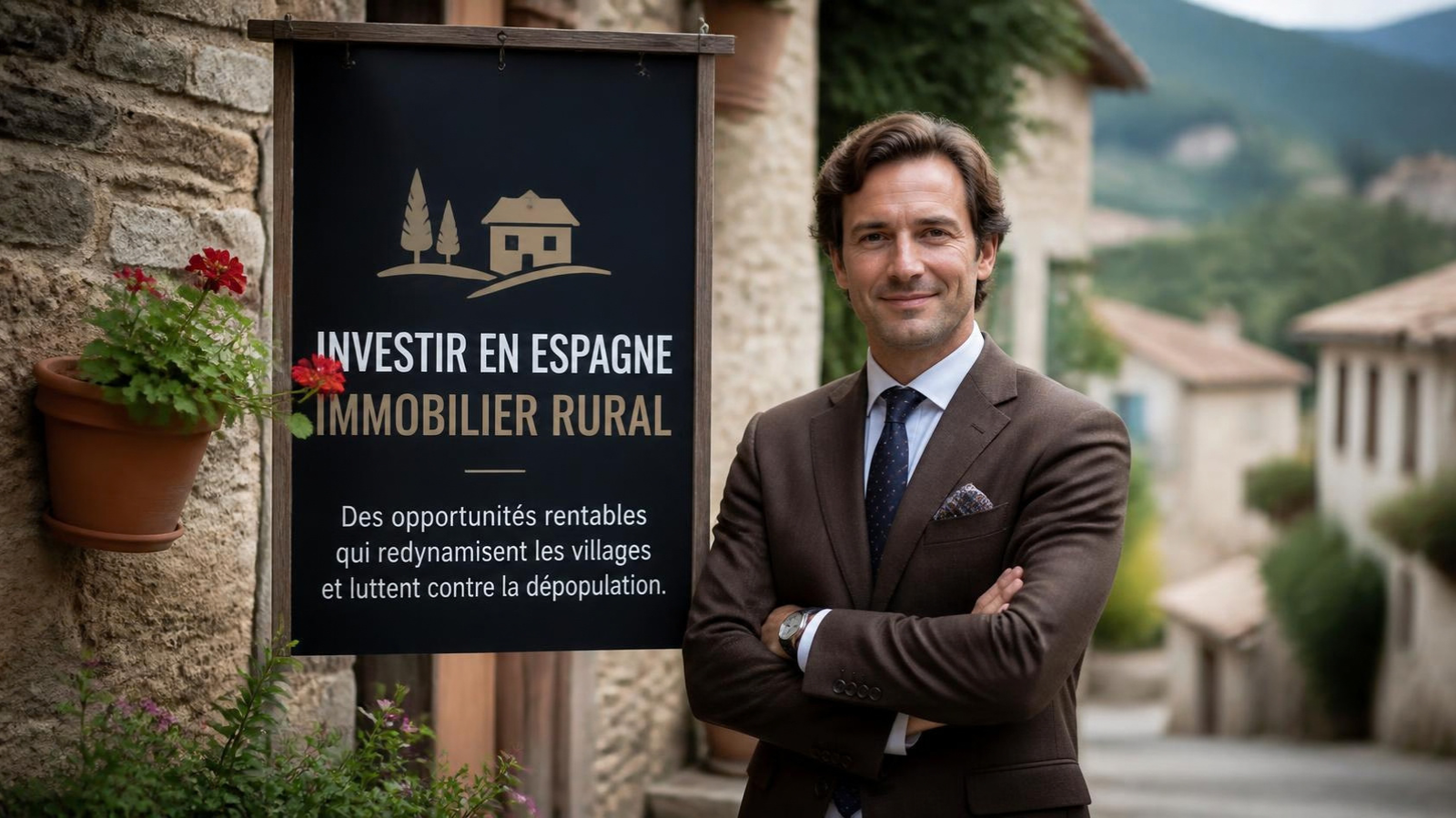
Discover profitable opportunities in Spain’s rural real estate investing. Learn how investing in empty countryside homes restores villages, curbs depopulation, and offers affordable rentals—making Spain’s rural property market a growing investment trend.
Spain’s Rural Real Estate Renaissance: How Investing in the Countryside Could Curb Depopulation and Offer New Profitable Niches
The New Frontier for Real Estate in Spain
Spain’s real estate map has long been dominated by bustling urban centers, luxurious coastlines, and iconic tourist hubs. Yet, beyond the glistening skylines of Madrid, Barcelona, and Valencia lies an untapped territory: rural Spain. With over 3.8 million empty homes dotting the countryside—many in towns plagued by falling populations but rich in charm, history, and affordable potential—a new wave of investors and entrepreneurs is looking beyond the city’s borders. They are betting on the rural real estate niche, aiming to counteract depopulation, restore derelict properties, create social value, and realize sustainable returns.
This revolution is not just about acquiring picturesque cottages or rustic fincas. It’s emerging as a counterbalance to the urban housing bubble, a model rooted in social impact, affordable rents, and regional revitalization. Can rural Spain truly become a real estate haven, both profitable for investors and vital for the future of the regions themselves?
From Urban Bubble to Countryside Opportunity
The Urban Predicament: Saturation, High Prices, and Stressed Supply
The Spanish real estate investment landscape has long skewed toward large-scale developments in metropolitan areas. Residential towers, offices, and retail spaces in Madrid, Barcelona, and coastal hotspots traditionally attract the lion’s share of capital. However, these markets are facing unprecedented challenges. Housing crises, soaring rents, shrinking availability, and intense competition have not just made the urban property market less accessible for ordinary people—they’re also forcing investors to hunt for new, undervalued segments.
The Countryside Paradox: Empty Homes, Falling Populations
While cities overflow, Spain’s countryside tells a different story. According to recent studies, some 3.8 million homes sit vacant nationwide—around 14% of the total housing stock—and a significant portion of these are in rural municipalities. Across some 3,900 towns, population density falls under 12.5 inhabitants per square kilometer, well below the EU’s very low-density threshold.
These areas, collectively covering almost half of Spain’s national territory, are not only awash with empty properties—they are also actively “emptying out” as residents, especially the young, flee to cities for employment and higher education. This vicious cycle of depopulation means that many rural villages are at risk of disappearing as local services such as shops, schools, and bars are forced to close.
The Investment Model: Rehabilitating Rural Homes for Affordable Rent
Socially Conscious Returns: Profitability Meets Local Impact
The new rural investment model isn’t just about pounding the table for rural authenticity. It’s predicated on a pragmatic synergy between social impact and profitability. Investors, often organized as Social Real Estate Investment Trusts (REITs) or mission-driven entrepreneurs, buy distressed or abandoned homes at remarkably low prices, rehabilitate them, and offer them as affordable rentals to new residents.
According to the latest EY consulting study, net investor returns can reach up to 3%—not extraordinary by urban standards, but in line with safe, low-volatility assets. Perhaps even more crucially, these investments enable the preservation and revitalization of Spain’s rural built heritage, keeping the villages alive for future generations.
Where’s the Potential? Strategic Location is Key
Not all rural locations are created equal. The most attractive municipalities for this strategy are found close to major cities, thriving economic corridors, or those boasting strong tourist appeal. The Spanish regions of Castile and León, Aragón, Castile-La Mancha, and La Rioja are highlighted as prime territories. Within these, villages of 1,000 to 2,000 inhabitants are especially targeted—large enough to support schools, social life, and commerce, but small enough that even a handful of new families can make a transformative impact.
Curbing Depopulation: How Real Estate Investment Can Break the Cycle
A Virtuous Circle: Investment Begets Inhabitants Begets Services
The central challenge is to reverse the downward spiral of depopulation. As houses are left empty, their condition deteriorates, making them less appealing and further accelerating rural exodus. New investment into these properties initiates a virtuous circle: renovated homes attract residents, who in turn sustain local businesses, schools, and services, bolstering the area’s appeal to further families and, by extension, more investment.
A testimony from TECHÔ Rural, a leading operator in this niche, illustrates the point. Working in towns like Paredes de Nava (Palencia) and others across Castile and León, they link investors with families—sometimes coordinating with local governments and NGOs to ensure a smooth re-population process.
Leveraging the Existing Housing Stock
Many revitalization efforts focus not on new construction, but on the underutilized or derelict housing stock—bricked-up cottages, empty townhouses, or neglected public buildings. Other notable projects, such as HONORSE Tierra de Pinares, prioritize the conversion of municipal properties into homes or workspaces. HabitaRural operates a regional portal to match available properties with interested newcomers, streamlining the entire process.
These initiatives help restore the social and architectural fabric of rural Spain, attracting a mix of young families, remote workers, and even retirees in search of tranquility and affordable living.
Obstacles to Rural Real Estate Investment
The Bureaucratic Maze
Despite the promise and potential, investing in rural real estate in Spain is not without its challenges. The bureaucratic complexity encountered in renovating properties, especially heritage or town hall-owned buildings, remains a serious hurdle. Lengthy procedures for permits, ambiguous zoning regulations, and inflexible local planning rules slow down projects and discourage would-be investors.
As the EY report underscores, administrative streamlining and updated regulations are critical. Faster, clearer processes would enable investment flows to reach rural areas, reducing risk and uncertainty. Ministries, regional governments, and local councils must coordinate to simplify land development and rehabilitation mechanisms.
The Infrastructural Lag
The second, perhaps even greater, obstacle is infrastructural backwardness. Many rural municipalities struggle with limited healthcare services, outdated schools, scarce cultural options, and, critically, patchy digital connectivity—deterring both new residents and investors. Reviving an abandoned house means little if its occupants cannot access high-speed internet, reliable transport, or essential services.
To truly draw new populations and foster long-term settlement, the EY report and sector experts urge a holistic approach: upgrading infrastructure, revitalizing local economies, and developing modern services in tandem with the housing projects.
Beyond Housing: The Need for a Comprehensive Strategy
Everyone agrees that affordable homes alone are not enough. The winning strategy combines property renovation with economic incentives, job creation, and new business opportunities. Cross-sector collaboration—with public authorities, private investors, and the non-profit sector—proves most effective.
Policy Initiatives and Support Mechanisms
Incentives, Subsidies, and New Partnerships
Spanish and EU administrations are beginning to recognize the urgency and importance of reviving rural real estate markets. Tools available include renovation subsidies, favorable loans, tax breaks for rural investors, and direct co-investment models. The government can also play a proactive role in identifying and listing eligible properties, smoothing administrative hurdles, and partnering with Social REITs or other private actors.
In some cases, policy focus is being directed to larger municipalities or regional capitals capable of “anchoring” services and spinning off secondary effects into surrounding villages. This clustering helps maintain healthcare, educational, and retail services while creating a ripple effect that benefits nearby towns and hamlets.
Success Stories: Pioneers of Rural Revitalization
Numerous cases demonstrate the strong multiplier effect rural real estate investment can have. In Castile and León, for example, coordinated action by local councils, private owners, and social investors has revived not just dozens of abandoned homes, but also small schools, artisanal businesses, and even local festivals—tangible proof of the model’s promise. In Aragon and La Rioja, village consortia have attracted remote IT workers, bringing new dynamism to previously ailing towns.
The Future: Challenges and Opportunities
The Impact of Digital Nomadism and Changing Lifestyles
The post-pandemic era, with the rise of teleworking and digital nomadism, has further boosted interest in rural living. More people than ever are willing to swap urban stress for rural peace—provided there are basic amenities and reliable internet.
Spain’s varied climate, rich regional cultures, and affordable rural properties make it uniquely placed to capture this new demographic. If the right investments are made in infrastructure and regulations, the next decade could see more urbanites moving to rural areas for long-term settlement.
Sustainability: A Key Consideration
Modern rural investment strategies also increasingly factor in sustainability. Renovated properties are often retrofitted for energy efficiency, while new residents help upgrade public services—reducing the country’s overall carbon footprint and supporting local food production. Environmental stewardship can also be a selling point, attracting eco-conscious tenants and investors alike.
Practical Guide: How to Invest in Rural Real Estate in Spain
Steps for Prospective Investors
- Identify promising regions and municipalities: Proximity to urban centers, tourist appeal, and existing service infrastructure are key.
- Work with local partners: Social REITs, local councils, and established rural investment platforms can offer invaluable guidance.
- Secure legal and technical advice: Renovation, especially of heritage buildings, can be legally complex—professional advice is critical.
- Consider joint ventures: Partnering with municipalities or non-profit organizations may open up subsidies or co-investment opportunities.
- Don’t overlook social impact: Proposals prioritizing the arrival of families, support for local businesses, and heritage preservation are more likely to receive community and government backing.
Risks to Watch Out For
- Prolonged bureaucratic timelines
- Uncertain property titles
- Potential for continued depopulation if infrastructure is not upgraded
- Volatility in local economies
A Unique Moment for Rural Spain
While Spain’s cities will always be magnets for real estate capital, the re-awakening of the rural property market represents a new chapter—one in which investors can seek moderate, steady profits while helping to reverse decades of depopulation and decline.
The challenge is formidable, but the prize is great: sustainable communities, vibrant towns, and an entirely new life cycle for millions of empty homes. As social investment models, digital innovations, and cross-sector partnerships take root, Spain’s countryside may soon see the return not only of residents and families but of hope and opportunity.
For those seeking to escape the overheated urban bubble, rural Spain is opening its doors—and its windows—wide.
If you are considering rural real estate investing in Spain, now may be the time to explore this promising convergence of social impact, profitability, and countryside revival.
Tags:
Spain rural real estate, rural investment Spain, countryside properties Spain, depopulation Spain, social housing Spain, affordable rentals Spain, Spanish village homes, property investment Spain, real estate trends Spain, rural revitalization Spain