Explore how Sweden’s real estate transactions soared in September, with home sales up 9%, amid differing trends for condominiums and villas. Dive into regional analysis, price movement, and what’s driving the Swedish property market’s resurgence.
Sweden’s Real Estate Transaction Surge in September: A Comprehensive Analysis
Strengthening Momentum in Sweden’s Housing Market
Sweden‘s housing market showed renewed strength in September as real estate transactions jumped by 9 percent compared to the same period last year, according to the latest Swedish Real Estate Statistics. This upturn marks a significant point in Sweden’s real estate transaction landscape and hints at changing sentiments among buyers and sellers alike.
The 9% Uptick: Decoding Sweden’s Real Estate Transaction Boom
What the Numbers Reveal
September 2026 was a standout month for housing transactions in Sweden. According to official figures, the nation saw 9% more homes sold than in September of the previous year. This climb in activity breaks the pattern of stagnation seen through much of recent years, as higher interest rates and economic uncertainty had dampened the market. The figures encompass both villas (detached homes) and condominiums (bostadsrätter), the two primary property types dominating Sweden’s housing landscape.
Driving Forces Behind Increased Sales
Industry experts point to a mix of growing buyer confidence and more realistic seller pricing as catalysts behind the transaction surge. The normalization of interest rates, modest wage growth, and a generally stable economic outlook have restored some optimism among prospective buyers. Additionally, pent-up demand from previous months—when many hesitated to move due to economic concerns—is now being released onto the market.
Condominiums vs. Villas: A Tale of Two Price Trends
Condominium Prices on the Rise
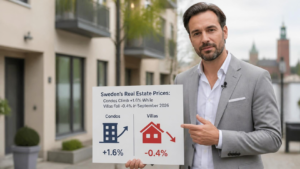
Nationwide, condominium prices increased by 1.6 percent in September compared to August, continuing a trend of steady, modest gains. Several factors contribute to the appeal of condominiums—or “bostadsrätter”—in Sweden:
- Urbanization: Young professionals and families gravitate toward city centers for work and amenities.
- Affordability: Condos remain a relatively accessible entry point in the property market.
- Investment Potential: Given the flexibility and lower maintenance, condos are attractive to both end-users and investors.
Villa Prices Dip—But Only Slightly
While condos saw their values climb, villa prices experienced a slight nationwide decline of 0.4 percent in September. The drop follows what many analysts describe as a market correction from the previous year’s highs.
- Stockholm Area: Villa prices slipped slightly—reflecting both seasonal patterns and broader market recalibrations.
- Gothenburg and Malmö: Contrary to the national trend, villa prices in these urban centers increased, suggesting strong localized demand and differing economic dynamics compared to the capital region.
Regional Breakdown: Stockholm, Gothenburg, Malmö
Greater Stockholm: A Market Cooling Down?
Stockholm, Sweden’s capital and largest urban area, experienced a minor decrease in villa prices despite overall transaction growth. This adjustment is not necessarily a sign of weakness but could reflect natural affordability limits at the high end of the market, especially as more buyers turn to condominiums.
Gothenburg: Positive Momentum
Sweden’s west coast metropolis witnessed increases not only in condominium sales but also in villa prices. The region’s growing tech sector, infrastructure projects, and robust rental market support long-term demand. As families and professionals continue to flock to Gothenburg, housing remains in strong demand.
Malmö: Consistent Upward Trajectory
In southern Sweden, Malmö saw villa prices rise, mirroring the city’s ongoing urban renewal and its attractiveness as both a living and working destination. Cross-border connections with Denmark, especially Copenhagen, add to the region’s property appeal.
Sweden’s Evolving Real Estate Landscape
Economic Factors Influencing the Housing Market
- Interest Rates: While the Riksbank’s rate increases have curbed runaway price growth, stabilization has encouraged buyers back into the market.
- Employment Levels: Steady employment is bolstering household confidence, critical for high-value decisions like home buying.
- Demographic Shifts: A rising population—particularly in urban centers—is sustaining long-term demand for housing.
Supply and Demand: The Inventory Impact
Inventory levels remain tight in several regions, pressing up against rising demand. New construction has lagged behind population growth in metropolitan areas, further supporting prices, especially for centrally located condominiums.
Market Sentiment: Strong Appetite for Transactions
Real estate analysts and agents across Sweden point to a “good appetite” among both buyers and sellers. This is evidenced by a steady stream of listings, brisk sales, and, in many areas, properties changing hands quickly. The psychological turnaround follows a period of caution, indicating improved confidence in market fundamentals.
Buyer Profile: Who’s Leading the Charge?
- First-Time Buyers: Encouraged by more predictable rates and moderate price movements.
- Upsizers and Downsizers: With more stable conditions, families are moving to larger homes, while some older owners opt to downsize to city apartments.
- Investors: Seeing opportunities in rental properties given ongoing urbanization trends.
Challenges and Considerations
Affordability Concerns
Despite improved sentiment, affordability remains a challenge—especially for first-time buyers in urban centers. Policymakers are closely watching borrowing costs and wage trends to ensure the market’s momentum does not shut out new entrants.
Regional Disparities
While cities like Gothenburg and Malmö flourish, rural areas and smaller towns still experience sluggish growth or even further declines in property values. This divergence poses long-term challenges for a balanced national housing market.
Sustainability: Green Buildings and Urban Planning
With Sweden’s strong environmental focus, buyers are increasingly attentive to energy efficiency, sustainability certifications, and the adaptation of smart-home technologies in new developments. Green credentials can now drive price premiums, especially in newer urban projects.
The Road Ahead: Projections for the Autumn and Winter Markets
Analysts predict that Sweden’s real estate transaction volume may stay robust through the autumn, supported by stable macroeconomic conditions and sustained demand in key cities. However, uncertainties—such as global economic shifts, interest rate changes, and policy decisions—could temper the pace in coming months.
Recommendations for Buyers and Sellers
- Buyers: Should act decisively in high-demand areas as competition intensifies, especially for well-located condominiums.
- Sellers: Can benefit from the current upturn but should remain realistic about pricing, particularly for villas outside core urban areas.
Sweden’s Real Estate Transaction Market at a Turning Point
September’s 9 percent surge in home sales represents a pivotal moment for Sweden’s real estate transaction landscape. As confidence returns and market participants re-enter with renewed vigor, understanding regional nuances and property-type trends will be crucial for making informed decisions in 2026’s complex market. While condominiums seem poised for continued gains, villa prices will bear watching, especially in Stockholm versus other leading cities like Gothenburg and Malmö.
Summary Table: September 2026 Real Estate Trends
| Region | Property Type | Price Change (MoM) | Transaction Volume Change (YoY) |
|---|---|---|---|
| Nationwide | Condominium | +1.6% | +9% |
| Nationwide | Villa | -0.4% | +9% |
| Stockholm | Villa | Slight decrease | N/A |
| Gothenburg | Villa | Increase | N/A |
| Malmö | Villa | Increase | N/A |
Sources:
- Swedish Real Estate Statistics (Statistiska Centralbyrån – SCB)
- Interviews with Real Estate Agents, Market Analysts
Tags:
Sweden real estate, Sweden housing market, real estate transaction, Swedish property prices, Stockholm real estate, Gothenburg housing, Malmö property sales, housing trends, Scandinavian real estate