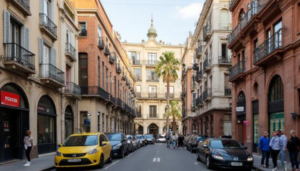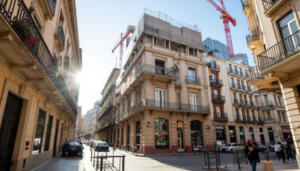

Century 21’s “Housing Accessibility 2026” finds Lisbon, Porto and Faro unaffordable for average families as coastal housing disappears and the interior strains.
A new study from Century 21 Portugal, “Housing Accessibility 2026,” warns that affordable housing in Portugal is rapidly disappearing from the coast and concentrating in the interior — creating an increasingly unequal geography of where families can live.
The report finds that in the country’s main coastal capitals — Lisbon, Porto and Faro — buying or renting a typical family home has become financially unaffordable for the average local household. In just three years the purchase of housing in the large coastal capitals has become largely unviable, now requiring more than 50% of disposable family income. Lisbon, Porto and Faro are listed as totally inaccessible for buying.
Renters face an even darker picture. Renting a reference 90 m² home is currently inaccessible in six district capitals and requires a “high effort” in ten more. Only two interior cities offer rents under the sustainability threshold of 33% of income. In the Lisbon and Porto metropolitan areas and across the Algarve, all analysed municipalities exceed a 50% rental-effort rate. In 2025, more than half of municipalities reviewed demand rents above €1,000 per month for a 90 m² home — a sharp jump from 2022, when only two municipalities reached that level.
Affordable homes are shrinking
The study highlights that what counts as “financially sustainable” housing has gotten much smaller. In the most pressured zones — Lisbon Metropolitan Area, Porto Metropolitan Area and the Algarve — affordable housing now averages just 35–50 m², less than half the 90 m² reference used in the analysis. In Lisbon and Cascais a 90 m² home today typically costs between €420,000 and €450,000, with rents ranging €1,100–€1,700 monthly. Century 21 describes this displacement trend as “progressive territorial exclusion,” pushing families out of city centres.
Interior holds out — for now
The interior remains Portugal’s last stronghold of relatively affordable housing, but pressure is spreading inland. Only 13 municipalities offered 90 m² homes for under €200,000 in 2025, down from 35 in 2022. That decline shows the interior’s temporary refuge is eroding as demand and prices increase.
Wages lag behind prices
A core finding is a deep misalignment between incomes and housing costs. Between 2022 and 2025, household incomes rose about 16%, while house prices roughly doubled over the past five years and jumped a further 23.4% in 2025 alone. Today only 48% of housing supply is affordable to roughly 77% of Portuguese families, whose typical purchase limit is €330,000. The situation is worsened by Portugal’s median disposable income being about 30% below the EU average.
Calls for structural, long-term action
Century 21 calls this a structural problem requiring structural responses: sustained reinforcement of social housing, metropolitan-scale revisions of municipal master plans, modernization of building codes, investment in industrialized construction to scale supply, and integrated planning between housing expansion and transport/mobility. Without consistent, long-term intervention, the report warns, Portugal risks entrenching a two-speed housing geography with major consequences for social cohesion, forced mobility and the sustainability of its cities.
The study is a clear signal to policymakers, municipalities and the construction sector: reversing the trend will require coordinated action at scale to restore access to viable housing across the country.