
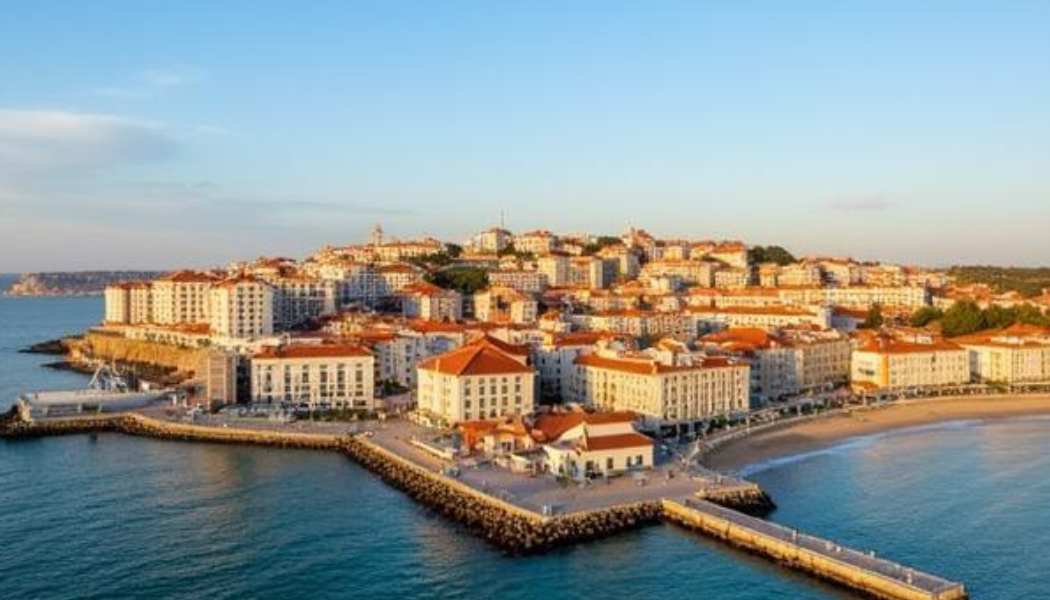
Discover how Portugal’s commercial real estate investment is predicted to reach €3 billion by 2026. Explore sector insights, macro trends, and the role of market stability, office, retail, industrial, hospitality, and residential segments.
Portugal’s Commercial Real Estate Investment Set to Reach €3 Billion by 2026: Detailed Insights and Future Trends
In recent years, Portugal’s commercial real estate sector has demonstrated remarkable resilience and adaptability, attracting both domestic and international investors despite global uncertainty. According to the Year-end 2025–2026 edition of the WMarket Review from WORX Real Estate Consultant, the sector is poised for continued growth, with investment volumes projected to return to approximately €3 billion in 2026, provided that the current environment of stability and confidence persists. This comprehensive article provides an in-depth overview of the performance, macro trends, and sectoral highlights shaping Portugal’s commercial property market as it heads into 2026.
1. Overview: Investment Landscape and Market Resilience
1.1. 2025: A Year of Performance and Recovery
Throughout 2025, the Portuguese commercial real estate market attracted over €2.75 billion in investment, exceeding expectations despite ongoing economic and geopolitical uncertainties worldwide. This robust performance was underpinned by several key factors:
- Stabilized interest rates, which provided greater predictability for investors.
- Political stability, maintaining Portugal’s reputation as a reliable and attractive investment destination.
- Safe haven positioning in the broader European context, especially amid global turbulence.
As a consequence, prime yields compressed by 25 basis points at the start of 2025 for most sub-segments, barring top-tier shopping centers. This favorable environment cemented Portugal’s reputation for investment resilience and consistency.
1.2. Outlook for 2026: Confidence and Growth
Looking ahead, experts anticipate Portugal’s commercial property sector could reach the €3 billion investment mark in 2026, assuming the persistence of confidence, macroeconomic stability, and investor optimism. The sector’s performance and adaptability have been recognized at the international level, with the Portuguese market outpacing many of its European peers.
2. Sectoral Analysis: Performance and Key Drivers
2.1. Office Market: Trends and Prospects
2.1.1. Lisbon Office Market Dynamics
Greater Lisbon continues to be the epicenter of office demand, with 204,200 m² of space absorbed in 2025. While this figure represents an 8% decline compared to 2024, it still marks the fifth-best year on record—a testament to the sector’s strength.
2.1.2. Shifting Demand and Criteria
Current macroeconomic conditions are encouraging occupiers and investors to be more selective, prolonging decision-making cycles. This heightened scrutiny is expected to persist through 2026, with businesses focusing on sustainability, flexibility, and prime locations.
2.1.3. Prime Rents on the Rise
Prime rental prices in Lisbon’s office sector stood at €30.0/m²/month in 2025. Fueled by limited supply and strong tenant demand, rents are projected to exceed €35.0/m²/month by 2026—a significant increase reflecting both market confidence and asset quality.
2.2. Retail Market: Europe’s Standout Performer
2.2.1. Retail Sales and Recovery
Portugal led Europe in retail sales growth in 2025, buoyed by:
- Recovery in domestic consumption.
- Persistently high savings rates.
- Sustained inflows from global tourism.
The retail sales index reached 115.3 points, equating to 5% year-on-year growth and underscoring Portugal’s robust consumer market.
2.2.2. Prime Rent Evolution in Retail
Retail sector dynamism has attracted new brands and retail formats, especially in physical locations. As a direct consequence, prime rents have outstripped pre-pandemic highs:
- Lisbon high street: €145.0/m²/month
- Shopping centers: €115.0/m²/month
- Retail parks: €13.0/m²/month
These gains are supported by the scarcity of high-quality retail spaces and persistent tenant demand.
2.3. Industrial and Logistics: Adjustments and Optimism
2.3.1. Post-Boom Correction
After a banner year in 2024, when absorption in the industrial and logistics segments hit 485,000 m², 2025 witnessed a 39% slowdown. This adjustment is viewed as a natural market correction in response to global economic headwinds.
2.3.2. Future Growth Drivers
Despite the cooling of demand, prime rents continued an upward trend, reflecting the sector’s overall health. For 2026, a recovery to average demand levels is forecasted, driven by:
- Nearshoring and reshoring initiatives.
- Strategic investments in the defense sector.
- Increased focus on supply chain resilience and modernization.
2.4. Hospitality: Sustained Expansion Amid Global Appeal
2.4.1. Tourism’s Rebound
Tourism’s resurgence in Portugal continues to drive commercial real estate. In 2025:
- Overnight stays in tourist accommodations grew by 2% to 82.1 million.
- Resident overnight stays increased by 5%.
- Total revenues surged by 7% to €7,150 million.
- Average Revenue Per Available Room (RevPAR) hit €72.4.
2.4.2. Performance Indicators and Outlook
Positive trends in operational performance reflect ongoing global demand and the efforts to reposition Portugal’s tourism products for discerning international travelers.
2.5. Residential Sector: Lisbon and Porto in Focus
2.5.1. Lisbon
- Apartments sold: 9,310 (2025)
- Average price: €5,200/m² (up 10% vs. 2024)
2.5.2. Porto
- Apartments sold: 5,460
- Average price: €3,810/m² (up 13% year-on-year)
2.5.3. Institutional Rental Market
Persistent demand and a favorable legislative outlook are expected to benefit the large-scale institutional rental sector, setting the stage for broader participation and innovation in the years ahead.
3. Macro Trends Shaping Portugal’s Commercial Real Estate Landscape
3.1. Digitalization and AI Integration
WMarket Review highlights the accelerating integration of technology and artificial intelligence across real estate assets. The “smartification” of buildings and urban spaces is becoming fundamental, enhancing efficiency, sustainability, and user experience.
3.2. The Human Experience
The value proposition of commercial spaces is increasingly centered on human needs: flexibility, wellness, and adaptability are emerging as critical differentiators.
3.3. Hybridization and Flexibility
Spaces that offer versatility—capable of morphing to meet shifting business and lifestyle needs—will thrive. The hybridization of offices, residential, and retail uses is blurring traditional boundaries, supporting innovative urban transformation.
4. Investor Perspective: Why Portugal Remains Attractive
4.1. Safe Haven Market Status
Portugal’s enduring appeal stems from a combination of:
- Political stability
- Pro-business environment
- Transparent legal and regulatory framework
This unique positioning continues to attract both institutional and private investors seeking safety and growth.
4.2. Competitive Returns
Historical data demonstrates consistent returns in both capital appreciation and rental yield terms, even during periods of wider European or global market turbulence.
4.3. Economic and Infrastructural Strength
Government investment in infrastructure, connectivity, and digital transformation bolster long-term prospects for all real estate segments.
5. Risks and Challenges on the Horizon
Despite the rosy outlook, several factors must be monitored:
- Geopolitical uncertainty: Any renewed instability in Europe could impact investor sentiment.
- Macro-financial shifts: Interest rate changes or inflation surges could alter market dynamics.
- Supply constraints: Particularly acute in high-demand urban centers like Lisbon and Porto.
- Regulatory adjustments: Evolving frameworks must balance growth with sustainable urban development.
6. Projections for 2026: Key Takeaways
- Total Investment: Poised to return to €3 billion if stability persists.
- Office sector: Prime rents to surpass €35.0/m²/month in Lisbon.
- Retail market: Portugal to remain a stand-out performer in Europe.
- Industrial/logistics: Demand recovery supported by nearshoring.
- Hospitality: Sector to benefit from continued operational gains and steady tourism.
- Residential: Lisbon and Porto to sustain healthy transaction volumes and price growth.
7. Actionable Insights for Investors and Stakeholders
- Diversify portfolios across office, retail, logistics, hospitality, and residential.
- Prioritize assets with strong sustainability credentials and integration of smart technologies.
- Monitor legislative developments that could open opportunities in institutional rental and new asset classes.
- Stay agile to capitalize on evolving demand drivers, especially in flexible space formats and hybrid properties.
Portugal’s commercial real estate investment environment stands as one of Europe’s most dynamic, resilient, and promising frontiers. As 2026 approaches, the sector is poised to reach €3 billion in annual investment, underpinned by sector-wide adaptability, strong macro fundamentals, and a strategic orientation toward innovation, sustainability, and value creation. Investors who leverage these trends and maintain a close eye on market signals will be well-positioned to capitalize on Portugal’s enduring growth story.
Portugal commercial real estate investment | Portugal real estate forecast 2026 | Lisbon office rent 2026 | Retail property market Portugal | Industrial logistics Portugal | Hospitality sector forecast Portugal | Residential property Lisbon Porto | Real estate macro trends Portugal